Those living in Brancaster were used to aircraft passing over on a daily basis, as there were two airfields close by. RAF Bircham Newton had existed since 1916 in various roles, having started life as a training base for fighter pilots and then, at the end of the First World War, as a strategic bomber base. Between the wars the base was developed and expanded and in 1936 became a major Coastal Command airfield. Many of the airfield buildings still exist and give an excellent idea of what the base looked like in the 1940s.
However, our story is about the airfield closest to Brancaster, situated just north of Docking village, and the role it played in the 1940s, and specifically in D-Day in 1944. The site for the new airfield was chosen because of the flat land and its proximity to Bircham Newton; it was a satellite for this major airfield. RAF Docking was set up originally as a decoy field to distract enemy bombers from Bircham Newton, but quickly became an operational airfield as pressures on Coastal Command grew. RAF Docking was a small grass airfield intended to accommodate one or two squadrons, with support work, servicing and repairs being carried out at Bircham Newton.
During the war years Docking fulfilled a number of Coastal Command functions, including air/sea rescue, target towing, coastal patrol, training, reconnaissance, and ship strikes. Its most important role, largely unsung, was to be one of the main bases for meteorological duties and forecasts. However, in the early part of the war, Coastal Command was viewed very much as the “Cinderella service”, being short of planes, and having to make do with models that were already obsolete. One pilot based locally reflected: “Days drifted by without us being told what we were supposed to do, or how to do it. Grumbling began, none too quietly either, and the atmosphere became poor”.
It must be remembered at this point that the main role being undertaken by Docking was the reconnaissance of the waters of the North Sea and the English Channel in planes with one or two engines and very little offensive power. They were there to search for submarines and German coastal traffic that could be attacked. The Head of Coastal Command stated: “These flights brought home forcibly to me the intense boredom of long patrols over a grey and empty sea and not inconsiderable risks from the weather. Add to that the knowledge that an unsuccessful battle with a U-boat would probably involve a lingering death from exposure in a dinghy 400 miles from shore, or a rapid end by drowning: the nervous strain becomes very clear.” Evidently being aircrew in Coastal Command was a dangerous occupation, and one can only admire the men who faced these hazards day in, day out.
As the war went on RAF Docking began to specialise in the meteorological role. This was vital, as it produced weather information for the bombing attack carried out by RAF Bomber Command and the American 8th Airforce on German targets. A special meteorological flight 1401 (Met) was formed at the airfield, using different types of aircraft to collect different information. Spitfires were used to collect information from height, as they were able to climb to a higher altitude than any other RAF plane, particularly when unarmed. Very old biplanes, Gladiators, were used to collect weather data in the local area and Hampdens and Hudsons for information to be gathered at long range; the two former planes had a single engine and the latter two. The flights made exacting demands on pilots and aircrew, particularly the pilots of single-seat aircraft, as readings had to be very precise and taken at particular heights, and in particular areas.
This meteorological flight was also used to collect information in advance of D-Day; it became so crucial, that the whole operation was moved in 1944 to RAF Langham, as this airfield, the most northerly in Norfolk, had concrete runways and was therefore a more versatile facility, especially in poor weather. Flights from RAF Docking would have been used to carry out reconnaissance of the French shoreline as part of the operation to confuse the German defenders where the Allied invasion force would land.
During long flights which also kept a lookout for submarines, E boats and coastal craft, a lonely place was that occupied by the rear gunner, one of whom wrote the following: “As well as a bit lively, the rear turret was the coldest place in the aircraft, with draughts coming in from every opening and crack. We kept our eyes peeled constantly, searching the sea and sky. It was a bit of an art, because without realising it, you could finish up looking at just the perspex in front of you and not beyond. You had constantly to keep your eyes adjusted.” One can only imagine the hardship in carrying out this role in the winter, the dangers of engine problems or interception by enemy fighters constantly present – and then returning to the delights of freezing Nissan huts on RAF Docking. This demanded courage and endurance of the highest order.
Clothing was very important: a description by an airman stated: “We had Irwin jackets and trousers – sheepskin-lined leather – also high naval-type white woollen socks, roll-necked white woollen naval pullovers and wool long-sleeved vests and long johns. We attached to the collar a whistle to blow if you were unfortunate enough to find yourself in the sea, further, a yellow Mae West, an inflatable life jacket to keep you afloat.” Crews even carried a homing pigeon for use in an emergency in case the radio failed.
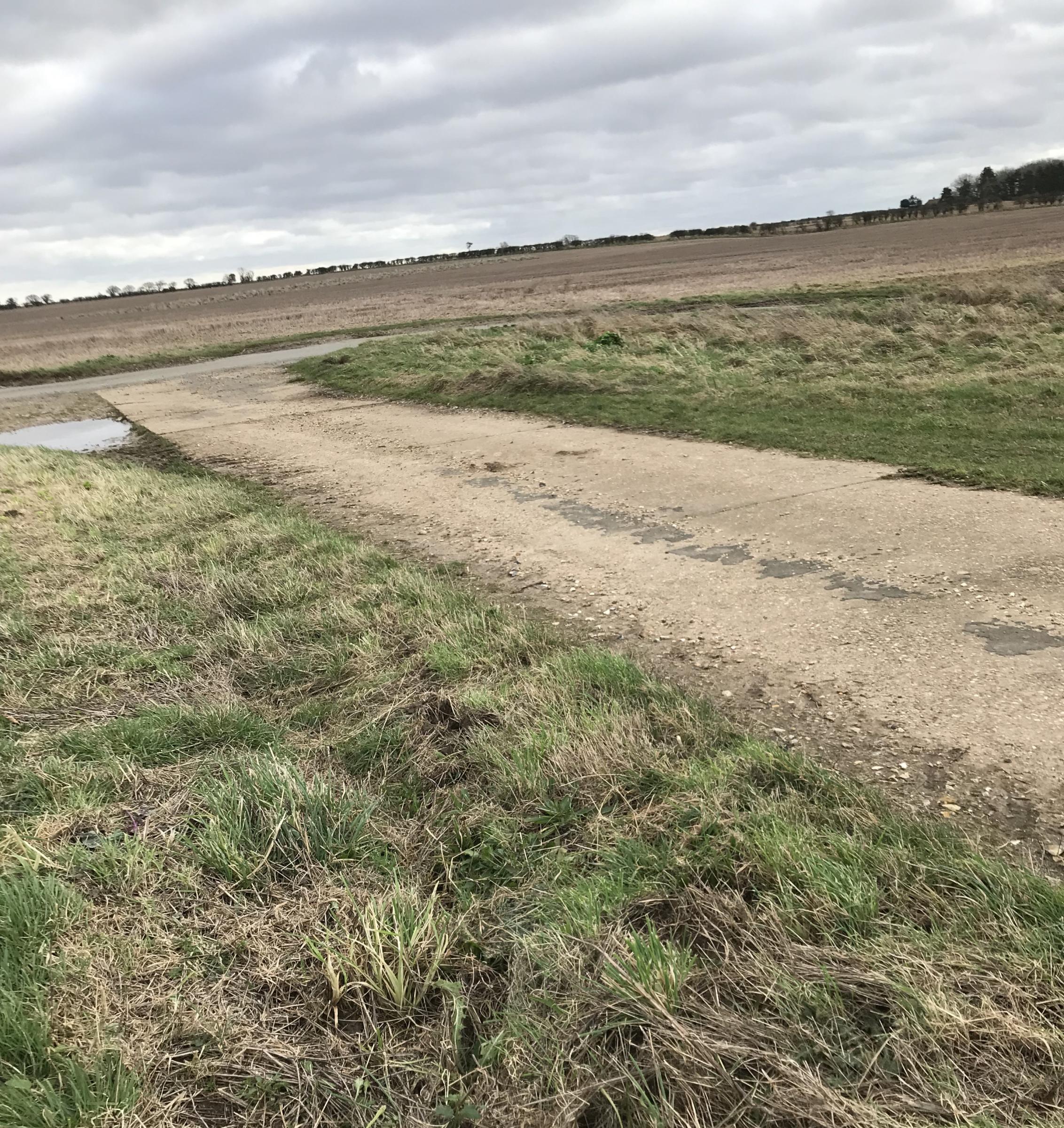
Today there is still much to be seen at the airfield, which reverted to agricultural land in 1958, the airfield having been closed in 1945. Most of the surviving buildings are on private land, such as the Watch and Flight offices, pillboxes and some accommodation blocks. The most accessible features are the service road which ran around the base together with the remains of some buildings close to the monument to the men and women who crewed the base during the war.
The pictures show the following:
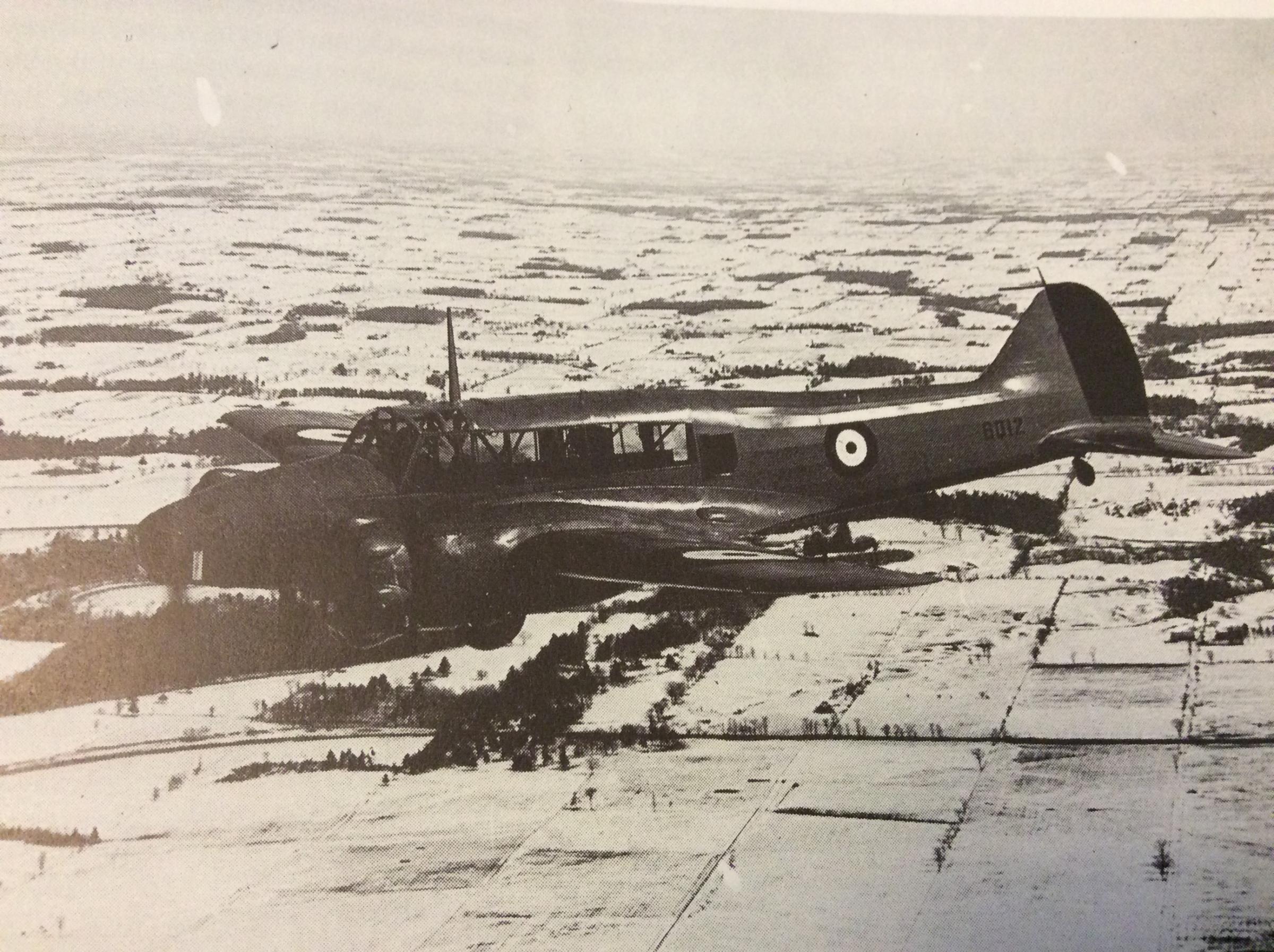
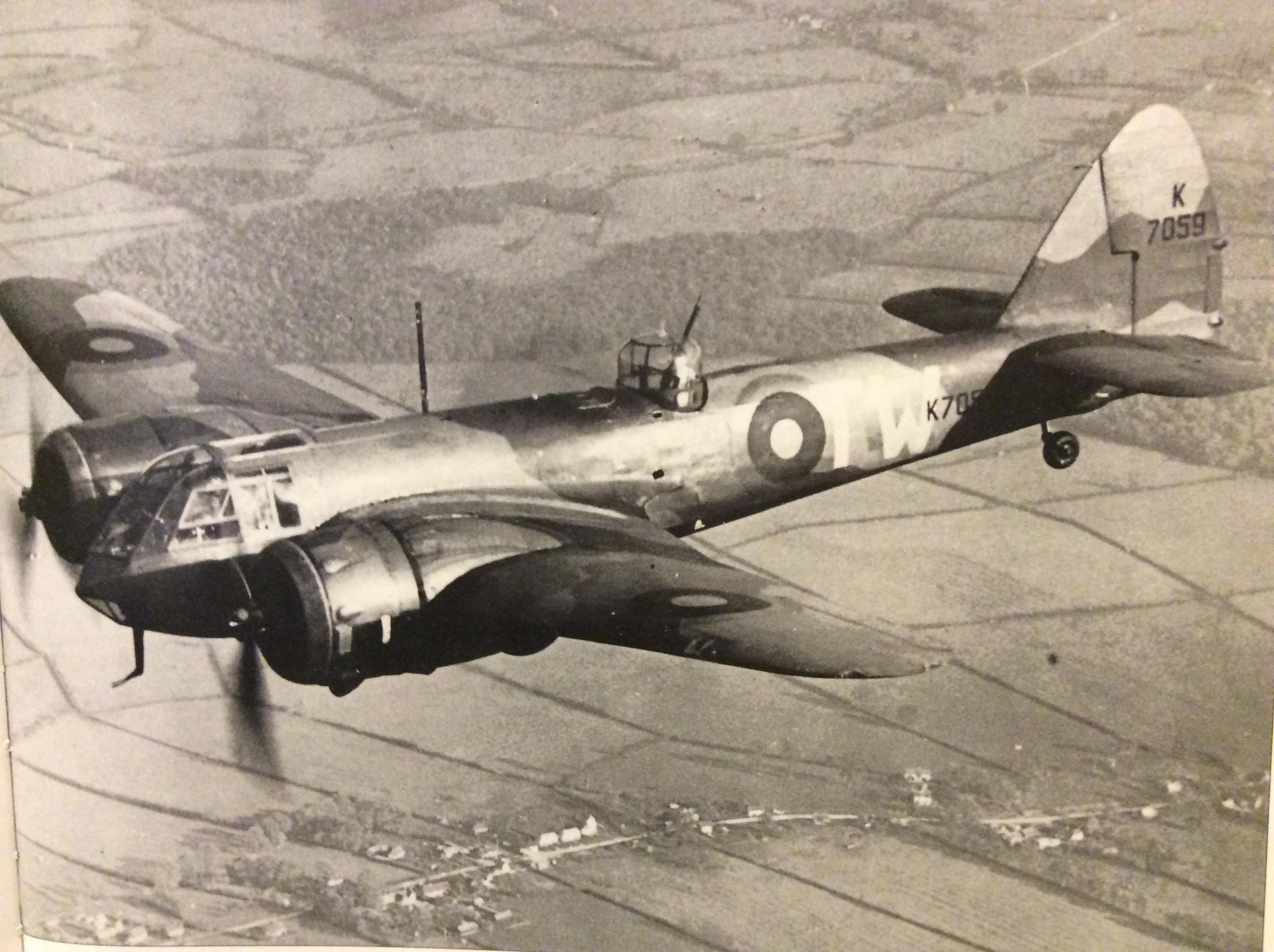
- The two most common aircraft at RAF Docking, a Bristol Blenheim and an Avro Anson
- A typical watchtower – this one at Bircham Newton
- The perimeter road and decontamination buildings at RAF Docking