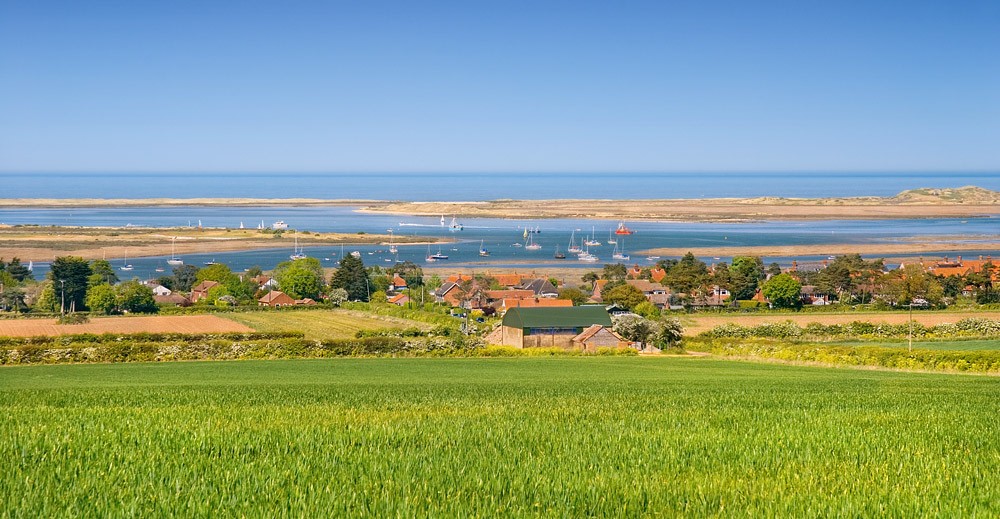
This story is about the Royal Norfolk Regiment (‘the Norfolks’); although soldiers in the Regiment came from all parts of the country, many were drawn from Norfolk. People in Brancaster would have been well aware of soldiers in the Regiment, either directly or through family and friends living in the county.
The regiment was raised in 1685 as Henry Cornwall’s Regiment of Foot and in 1751 was numbered the 9th Regiment of Foot in the British Army. In 1881 it was reformed as the Norfolk Regiment, being the County Regiment of Norfolk. In 1935 it became the Royal Norfolk Regiment and, following reduction in size of the British Army, was amalgamated in 1959 with the Suffolk Regiment to form the 1st East Anglian Regiment (Royal Norfolk and Suffolk). This regiment was later amalgamated with the other East Anglian regiments to form the Royal Anglian Regiment. Today A Company of 1st Battalion, the Royal Anglian Regiment is known as ‘A Company (Royal Norfolk) Company’.
The Norfolks have an extremely impressive list of battle honours, including the Napoleonic, Boer and First World Wars. In the latter the Norfolks were present on the Western Front and in the Middle East; the Norfolks were also present in the Korean War. However, this story is about the Norfolks’ road towards, and involvement in, D-Day.
At the start of the Second World War in September 1939 the Norfolks consisted of two regular Battalions; the first was stationed in India and did not return home until July 1940. The second was attached to the 4th Brigade of the 2nd Division, which went to France shortly after the war commenced to fight alongside the French and Belgian armies as part of the British Expeditionary Force (BEF). Following the German onslaught against the Allies in early 1940, the BEF began a long retreat which would end on the beaches of Dunkirk. The 2nd Battalion was tasked with covering the retreat, and following heavy shelling and an overwhelming onslaught where many soldiers were killed or wounded, was forced to surrender. What followed was one of the most disgraceful acts of the early part of the war, as 97 Norfolks soldiers who had surrendered were killed in cold blood by SS troops under the orders of their officer. During this period the Norfolks claimed their first Victoria Cross, won by Company Sergeant Major Gristock. The 2nd Battalion was reformed at home and subsequently sent out to India, where it fought in the Burma Campaign as part of the 14th Army.
Our story however follows the fortunes of the 1st Battalion home from India in 1940 and the territorial battalions that were formed. Three of the territorial battalions – 4th, 5th and 6th – initially served at home, guarding Britain against an invasion; they were then sent out to the Far East, where they fought in defence of Singapore and Malaya. The British Army surrendered to the Japanese in 1942 and the three battalions went into captivity as prisoners of war (POWs). Their treatment was appalling, and they took part in building the notorious Burma railway as forced labour, where many of them died. The 7th Battalion was formed and sent to France as part of the 51st (Highland) Division and, following the German onslaught on France, was forced to surrender, with only a few soldiers escaping back home. The 7th Battalion was then reformed at home and attached to the 59th Division, spending the next two years in intensive training.
The 1st Battalion was attached to the 3rd Division – nicknamed “The Iron Division”. It spent the time between 1940 and 1944 carrying out anti-invasion duties and intensive training. The Division was entrusted with being an assault force for D-Day on the British beach code-named “Sword”, which was centred on the port of Ouistreham in Normandy. The objective of the 3rd Division was the capture of Caen, the main city of Normandy, 10 miles inland from Sword Beach. The 1st Battalion of the Norfolks was allocated to the 185th Brigade, which would follow up the initial assault by the 8th Brigade on 6th June.
The Battalion was loaded into landing craft from ships offshore and was immediately faced with the full force of wind and waves as the small craft battled inshore. Naval ships were also bombarding the shore, meaning that there was a terrific noise. Many soldiers were seasick on the run into the beach, where swimming tanks (called DD tanks, which had inflatable skirts and a small propellor) were present, attacking the beach defences. There were also specialised armoured vehicles clearing mines, laying temporary tracks across the beach and using fascines to get over obstacles.
The 185th Brigade passed through the 8th Brigade and headed in the direction of Caen. However, it was soon found that the supporting tanks that were supposed to work with the brigade were not present, as they were stuck on a very overcrowded beach or involved in suppressing beach defences. A particular problem was a strongpoint nicknamed “Hillman”: this took a great deal of time to suppress and as a result the Norfolks suffered many casualties getting past it. Consequently the assault began to slow and British troops started to dig in, expecting German counter-attacks. Caen was no longer an achievable objective and, although the Allies were firmly ashore in significant numbers, it would take some months for Caen to fall, along with many casualties.
The 1st Battalion remained fighting in Normandy until the breakthrough occurred; they were again involved in the push across France and into Holland as part of the British 2nd Army. It was during this period that Corporal Bates was awarded the VC for his resistance to a counter-attack by German forces, despite being seriously wounded. Corporal Bates died of his wounds and is buried at Bayeux War Cemetery in Normandy. The Battalion took part in Operation Market Garden and the attempt to capture the bridge at Arnhem over the Rhine. They were also present in the assault on Germany until the surrender in 1945.
Meanwhile the reformed 7th Battalion had been attached to the 176th Infantry Brigade of the 59th Staffordshire Division and spent an intense period training at home in various locations. This Division was a follow-up force and landed on the British beach code-named “Gold” on 21st June 1944. The Division took part in the battle for Normandy and also in the subsequent bombardment by the Allies and the attempt to trap German forces in the Falaise Gap. The 59th Division and the 7th Battalion of the Norfolks were involved in further actions until August 1944, when they were disbanded to provide replacements for other divisions. During this period Captain Jamieson of the 7th Battalion was awarded the VC (dealt with in a separate item).
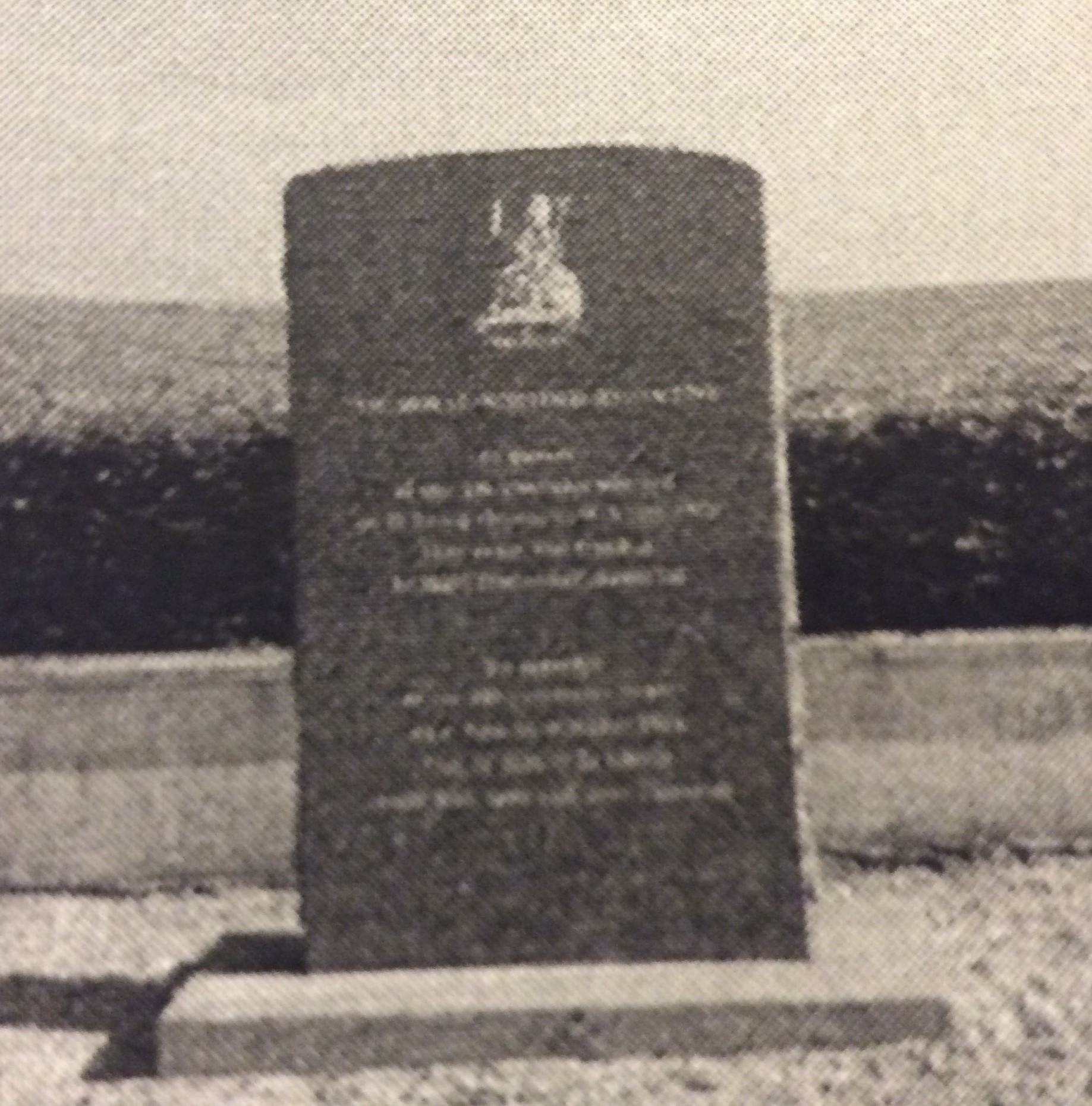
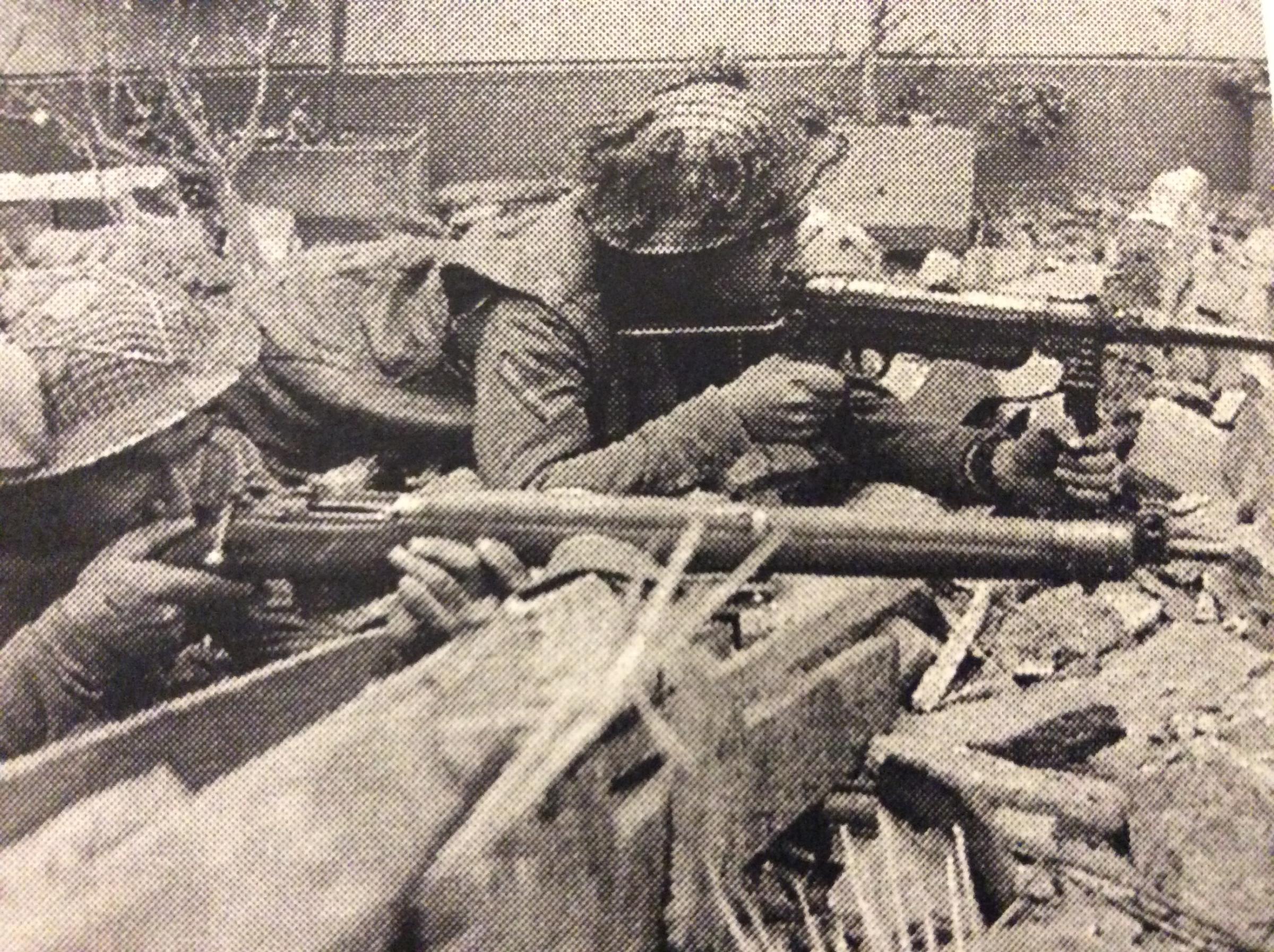
The pictures show soldiers of the Norfolks in Normandy, a commemorative stone to the Norfolks in Norfolk and the Norfolks’ cap badge.