The Second World War began in September 1939, and a small British army crossed to France to serve with the French forces. In May 1940, after eight months of relative inactivity, Germany overran Belgium, Holland and Northern France at lightning speed. The British army, along with substantial numbers of French troops, were pushed into a rapidly decreasing enclave based on the port of Dunkirk.
The British Government decided to put measures in hand to evacuate as much of the army as it could; the rescue began on 26th May. Admiral Ramsay was in charge of the evacuation from his base under Dover Castle, and he quickly realised that Royal Navy ships would not be enough: calls went out across England for shipping. A large fleet was swiftly assembled to help the evacuation – about 900 vessels in total – of which about 700 were privately owned. Many of these vessels were small and would be able to get right to the beaches to the north of Dunkirk harbour to collect troops and ferry them to the larger ships waiting offshore. These small boats were of every type, including paddle steamers, passenger ferries, fishing boats, lifeboats and cabin cruisers. In nine days, 38,226 troops were evacuated from the port and beaches.
In 1964 television personality Raymond Baxter purchased a Dunkirk Little Ship “L’Orage” and in 1965 invited other Little Ships to cross to Dunkirk to commemorate the 25th Anniversary: 55 boats took part. Following this, the Association of Dunkirk Little Ships was formed; boats that qualified were allowed to display a plaque with “Dunkirk 1940” and fly the Association’s House Flag, the Cross of St. George defaced by the Arms of Dunkirk. The returns to Dunkirk were set for every five years, and 75 ships took part in the 75th Anniversary.
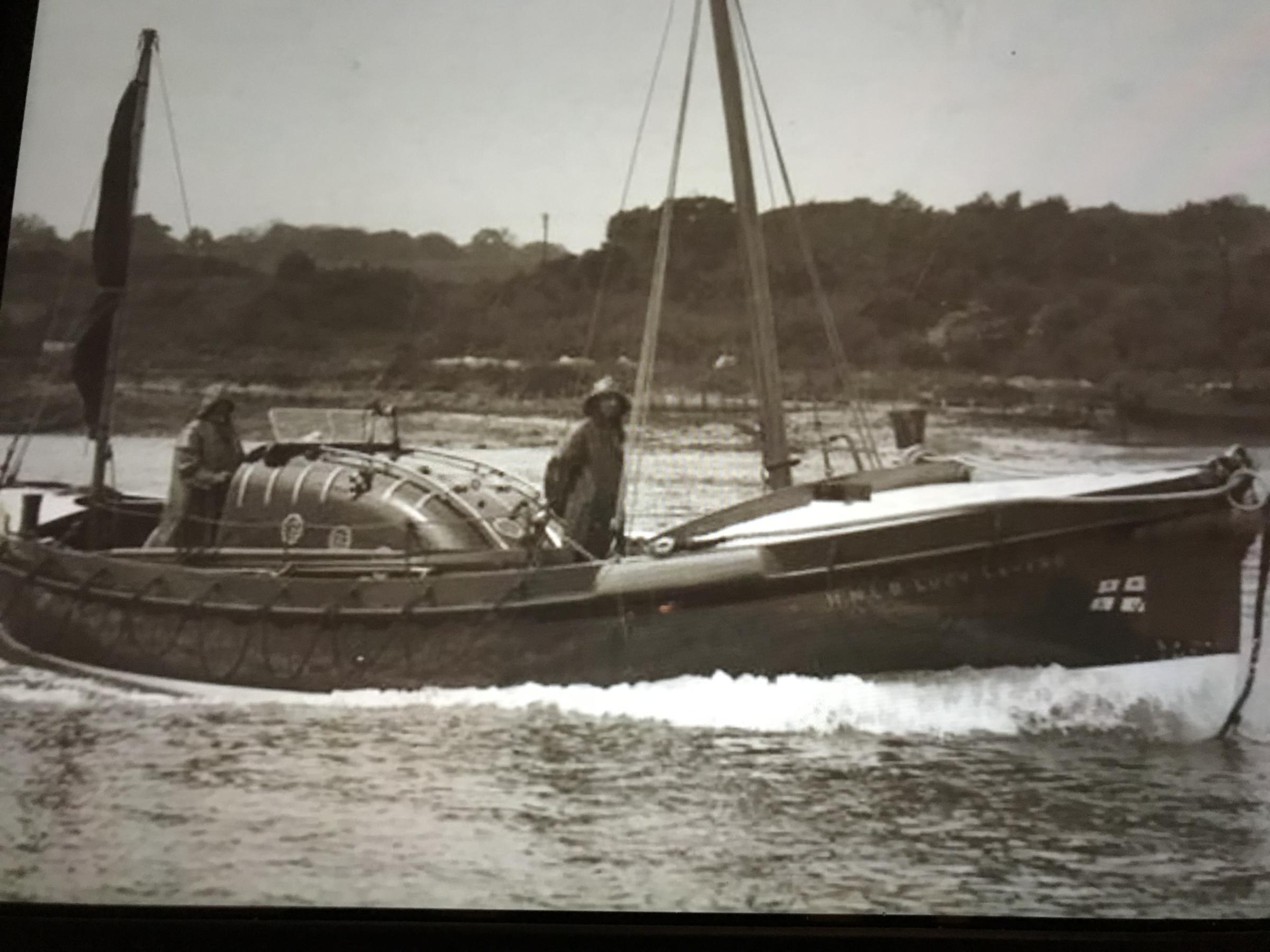
One of the Dunkirk Little Ships is the lifeboat “Lucy Lavers”, a Liverpool class single engine boat laid down in 1939 and completed in 1940. The vessel was equipped with a sail, as was the custom, with single engine lifeboats. It had a drop keel, used when the sail was raised, and was 35.5 feet long, just over 10 feet wide and with a draft of 2.25 feet. The boat displaced 6 tons and had a 35hp engine.
On completion in 1940 the boat was scheduled to go into service at Aldeburgh Lifeboat Station, but on arrival it was commandeered by the Royal Navy, along with the No. 1 lifeboat “Abdy Beauclarke”. The Lucy Lavers arrived at Dover at the end of May and was towed over to the French coast in order to save fuel. There she ferried soldiers from the beaches out to the larger ships for the next few days before returning to Dover on 4th June.
For the rest of the war the Lucy Lavers was in service at Aldeburgh, where she carried out numerous callouts, mostly to rescue downed airmen; the two lifeboats saved 107 lives during this period. After the war the boat remained at Aldeburgh for the next 19 years, saving a further 7 lives during this time. She was then transferred to the RNLI reserve fleet at Wells, Sheringham and Rhyl, where she saved 37 more lives.
In 1968 Lucy Lavers was retired from service and sold to become a pilot boat in Jersey. She was subsequently sold again to become a fishing boat and lastly, in 1986, a Dive and Ski Club tender, again in Jersey. In 1997 she was finally retired completely and sent to Simon Evans’ boatyard in France, where she joined the Dunkirk Little Boats Restoration Trust.
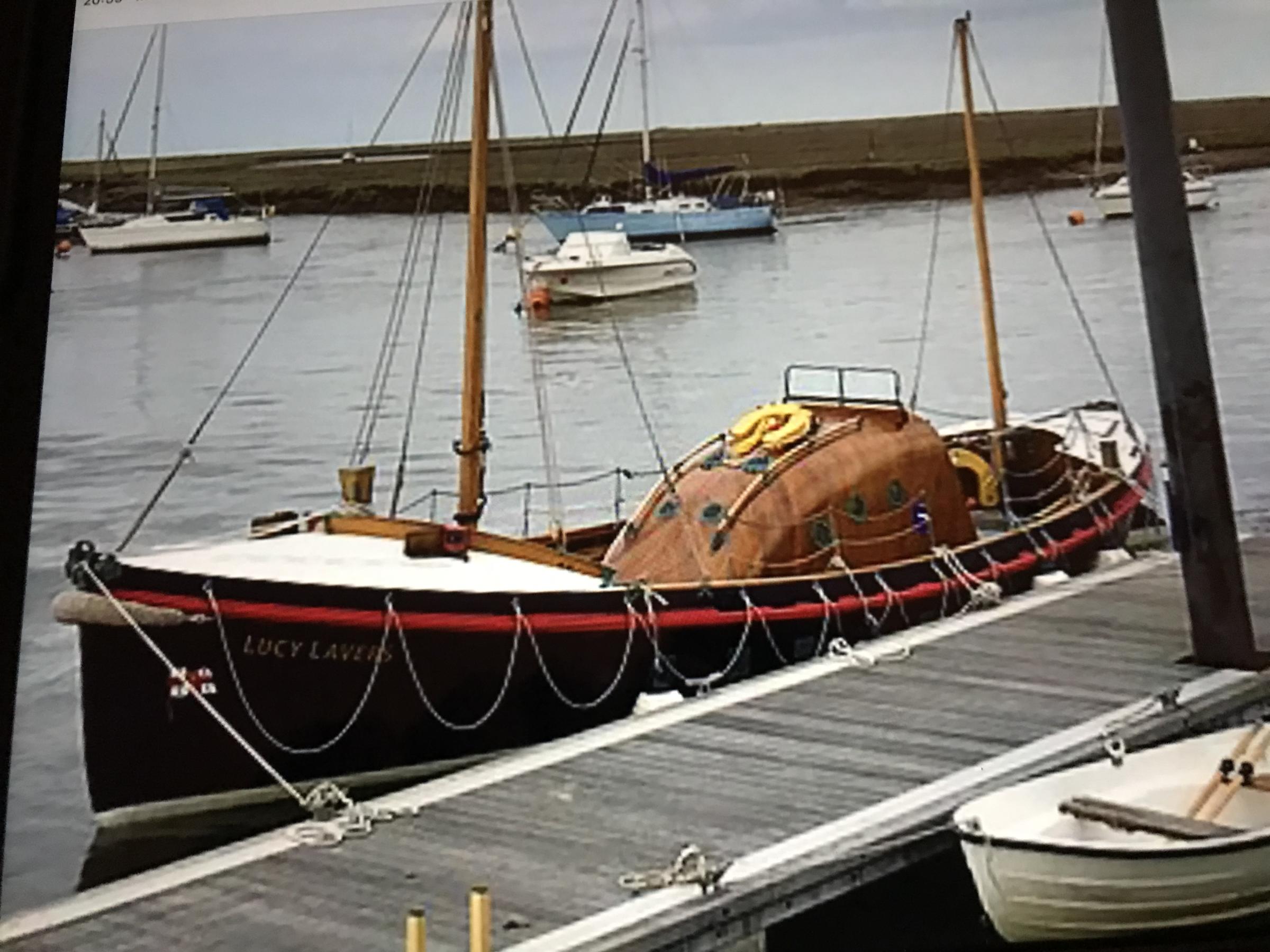
In 2006, thanks to the efforts of local benefactors, the Lucy Lavers was brought to Norfolk and, following a successful grant application to the National Lottery Heritage Fund, was restored to her original condition at Stiffkey from 2013. The restoration was completed in time for the boat to take part in the 75th Anniversary of the Dunkirk evacuation in 2015. Currently the Lucy Lavers is moored at Wells harbour, where she gives trips around and outside the harbour. It must be said, as is clear from the photograph, that the restoration produced a magnificent result for this richly historic vessel which has played such an important part in our nation’s heritage.
The reason the Lucy Lavers is included in this exhibition is that not only is she an example of a 1940s RNLI lifeboat with a long and distinguished career, but she would also have been on duty during the Normandy landings to rescue downed airmen and seamen.
The pictures show the Lucy Lavers early in her career and as she appears today after restoration.