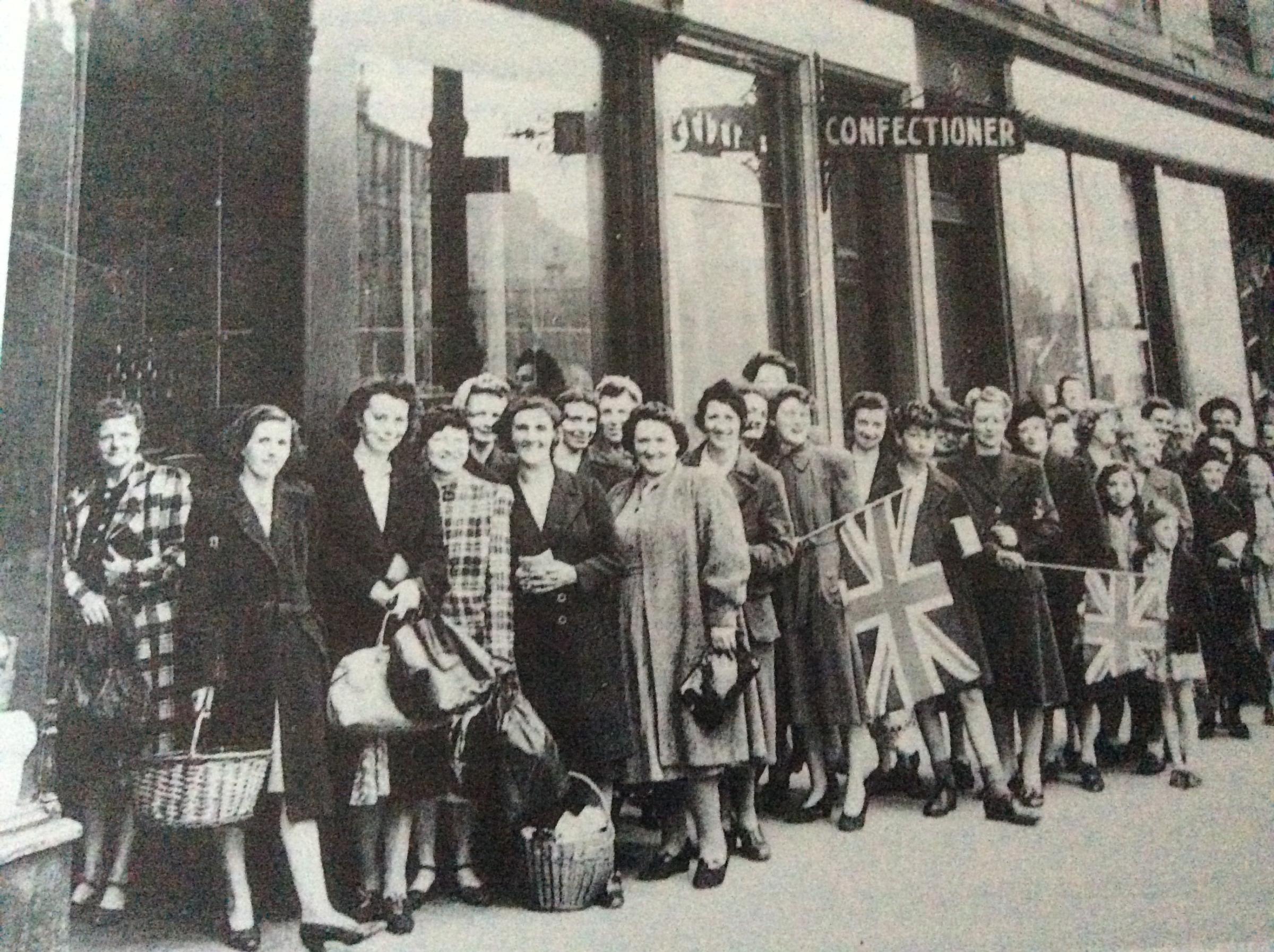
One of the most important impacts of the war on the people in Brancaster was the rationing which was introduced early in 1940 across most foodstuffs and many other consumable commodities. Other everyday items that were not rationed became increasingly difficult to obtain as the war went on.
In 1939 the population of Britain was about 50 million and there was a need to import 20 million tons of food each year in order to prevent the population from starving. All of this was mainly transported by sea by the largest merchant fleet in the world, which belonged to Britain. In the event of war, this fact would make the country very vulnerable, in that these ships could be attacked by submarines, aircraft, surface ships and mines. Amongst the vital foodstuffs imported were 70% of cheese and sugar, 80% of fruit, 70% of cereals and fats, and over 50% of meat. Oil and other essential raw materials were also imported. It was obvious, therefore, that when war started, German strategy was to impose a blockade on Britain and starve it of food and materials needed to continue the war.
The Government was forced into introducing the rationing of food and other consumables in order to eke out what was available and also maintain the ability to continue to resist German aggression. In respect of food, the Government introduced ration books which contained a range of coupons. People needed to register at the shops they would use for their coupons and shopkeepers were provided with enough food for their regular customers. Ration books had to be presented for food purchased and coupons would be cancelled accordingly. Although items had to be purchased, prices were strictly controlled by the Government and, as such, food was subsidised.
On January 8th, 1940, bacon, butter and sugar were rationed. Subsequently meat, tea, jam, biscuits, breakfast cereals, cheese, lard, milk, and canned and dried fruit became rationed too. By August 1942 all foods except vegetables and bread were rationed by weight, whereas meat was rationed by price. Of course, rationing led very quickly to an extensive and widespread black market in foodstuffs and some other scarce commodities. Fresh vegetables and fruit were not rationed, but supplies were limited in some areas. Lemons and bananas largely disappeared and those oranges that were about were costly and kept for children and pregnant women.
Throughout the war farmers were mandated to increase yields in order to increase the amount of home-grown food and to bring fallow land under cultivation. People were strongly encouraged to grow their own vegetables and some types of fruit: allotments appeared in gardens and public areas across the country in response to the Government’s “Dig for Victory” campaign.
Foods that were not rationed included rabbits and pigeons and fish, which became very expensive, as trawlers had been requisitioned for naval duties, and there was much danger – from mines and suchlike – in going out to sea to fish. Bread was also not rationed; the “National wholemeal loaf” introduced by the Government to replace white bread was not universally liked. Wrapping and slicing of foodstuffs was forbidden.
Restaurants and hotels quickly came under Government scrutiny, and meals were limited in price. No more than three courses were allowed, with only one being meat, fish or poultry. All alcoholic drinks became scarce and the beer that was available became much weaker in alcoholic content, because of the shortage of barley and sugar for brewing.
Petrol had been rationed from the beginning of the war in 1939 and in 1942, all petrol was restricted to emergency and essential services only.
The Government recognised that there was a need to ensure that people had a balanced diet. 2000 British Restaurants were established in schools and church halls across the country, including in Norfolk, where three-course meals were available for 9d. The Government was concerned about the effect of the rationing system on the nation’s health; research was commissioned that showed there to be no adverse effects from a diet that relied heavily on bread and potatoes. Interestingly enough, during this period infant mortality fell and life expectancy increased, possibly helped by the reduction in fat and sugar consumption. Children, expectant mothers and invalids had special provision made for them in terms of milk and fruit juice.
By 1945 food rations per week included the following: bacon and ham 4oz, sugar 8oz, tea 2oz, cheese 2oz, jam 1lb, butter 2oz, margarine 4oz, lard 2oz and sweets at 12 oz per month. Meat was rationed at 1s 2d, which bought about 1lb 3oz. Tinned and dried food was rationed on a monthly basis; milk was 3 pints a week, with one tin of powdered milk every two months. There were additional rations for those doing jobs requiring physical effort, such as mining or agriculture; those in the armed forces were fed on a completely different scale.
Other consumables rationed included clothing, through a system of points (except for children under four years old); soap was limited to 4 coupons a month (1 coupon equalling 1 bar of soap or equivalent soap flakes) and coal at 15 cwt per year in London and the southeast, and 20cwt elsewhere. Newspapers were restricted in the amount of newsprint they could use.
Some common items not on ration became very difficult to source. These included razor blades, pots and frying pans, toys, Christmas decorations, including trees, and ingredients for cakes. Wedding cakes tended to be made of decorated cardboard outside, masking a very small cake inside.
In Brancaster some people felt that rationing had not been a major problem. Women in rural areas were well used to, and already skilled at, eking out food and making use of the foodstuffs that could be found in the country, such as rabbits and wild fruit. However, diaries of others show that they were less accustomed to making do They were seriously concerned about acquiring food and other items deemed essential, such as matches and paraffin, although, as someone remarked: “Some people always seemed to have a way of obtaining these things”.
Rationing carried on into the late 1940s and early 1950s, with items coming off ration as they became more abundant. Strangely, one of the last items to come off rationing was sweets – which was a trial for many young children born after the war.
There are a number of items relating to rationing on the display table; the pictures show a queue waiting outside a shop for rations – a typical sight during the war – and the rush once sweet rationing ended.