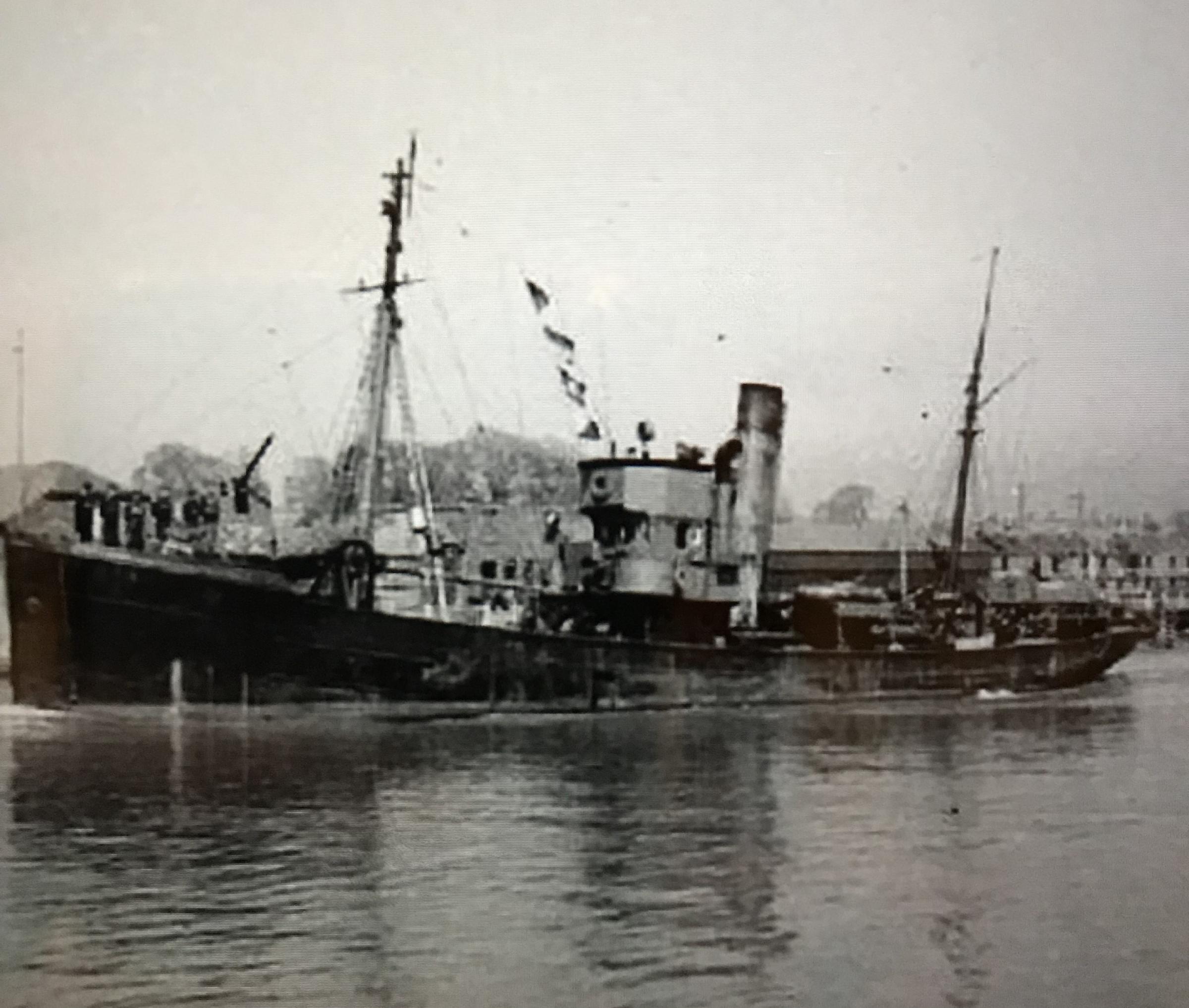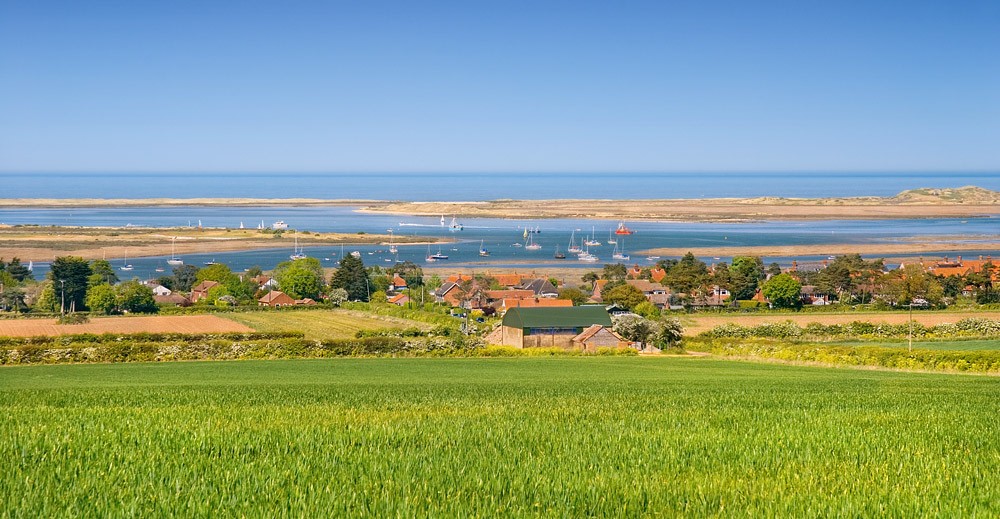
Visitors to Hunstanton often take a beach walk below the cliffs and come across the remains of a small ship lying close to the cliffs and ponder its story. What was this vessel and what is it doing – obviously wrecked – below St. Edmund’s Point, close to the village of Old Hunstanton and the historic lighthouse? There are many wrecks around the coast of Norfolk, mostly caused by storms, which are a frequent occurrence; that said, many of the wrecks are on the east coast, and few on the north.
T.S. Sheraton was built in 1907 in a shipyard near Hull, with an engine supplied by a nearby company. The ship was 130 feet long and 23 feet wide and had a 12-foot draft; it was constructed of metal plates over metal runners with some internal wooden frames. It was powered by steam and had a single screw to drive the boat. Its design and construction owed much to the older sailing trawlers, which meant it was an excellent sea boat, well able to cope with North Sea conditions.
The Sheraton was built at a time of growing tension in Europe, with Germany asserting itself on the continent and across the world. It was also building a powerful navy, which challenged the domination of the Royal Navy and made the country more vulnerable to invasion. The might of Royal Navy was, at that time, more than that of all the other navies in the world put together, but the increasing German strength was viewed as a major threat, given the great power of her army. Influential voices in the Royal Navy were promoting the idea that steam trawlers should be used as minesweepers in order to release Royal Navy ships for other tasks.
The Sheraton began its life as a trawler working out from Grimsby, which was a major fishing centre. When World War One broke out in 1914, the Sheraton was requisitioned by the Royal Navy to carry out minesweeping and anti-submarine duties. Sheraton was one of 800 trawlers requisitioned by the Navy to undertake wartime duties: often the fishermen were also taken into the service to crew their boats. Sheraton was transferred to become a boom defence vessel which patrolled the barriers erected to protect harbours and anchorages. She also carried out anti-submarine work, which involved net-laying and patrolling the anti-submarine booms.
In 1918 Sheraton returned to fishing duties at Grimsby but, with the start of World War Two, she found herself requisitioned by the Royal Navy in 1942. She was assigned to the Nore Command, which was an ancient command established in the 17th century to guard important naval bases such as Chatham. The command had an area to guard in the North Sea of about 200,000 square miles, including the large minesweeping trawler bases at Harwich and Yarmouth; it was disbanded in 1961.
Sheraton was assigned to guard and patrol duties in the Nore Command, armed with a small gun and, eventually, an echo-sounding device to locate submarines. As such she would have been one of the many trawlers used to protect the invasion fleets carrying troops, equipment and supplies to the Normandy beaches on D-Day and in the subsequent Allied campaign across France, Belgium and Holland into Germany.
Following the end of the war and after three years of hard service, the Sheraton was decommissioned: given her age and old-fashioned steam propulsion, there was no possibility of returning to her trawling duties. She was stripped of all her equipment, painted bright yellow and designated as a target for the RAF – very much like the SS Vina, featured in another article. The Sheraton’s engine was also probably removed at this time and concrete ballast put in its place.
In 1946 Sheraton was towed to the Wash and anchored off Brest Sand, Lincolnshire, to fulfil her target duties for the RAF. In April 1947 a fierce storm broke out in the North Sea and Wash areas; Sheraton broke from her moorings and drifted across the Wash, coming to rest on Hunstanton beach. Efforts were made to tow her off, but to no avail, and Sheraton was eventually sold to scrap merchants, who stripped the boat down to her lower hull and keel.
The wreck remains on Hunstanton beach to this day, exciting interest from visitors, but is a testament to a very sad end to a vessel that had given such sterling service over two world wars. The ship’s bell was rescued and became a monument still used today by the Bridleigh Sea Cadets. Sheraton was one of hundreds of trawlers used by the Royal Navy during the Second World War for a wide variety of tasks. They and their crews were crucial to keeping our shores, harbours and coastal trade more secure during very difficult days.
The pictures show the Sheraton as she would have looked originally, aground off the beach at Hunstanton and as she looks today. The ship’s bell is also shown.