Wartime was a time of stress and worry for many, with much emphasis on food, shelter, warmth and security. The other two things that helped make life more bearable were a degree of entertainment and being kept informed of what was going on in the war, but also in the country. For those living in rural areas access to sources of entertainment was in many cases more constrained than for city and town dwellers; this also applied to an extent to the supply of regular information. This was due to difficulties with transport, not helped by petrol rationing ceasing for all domestic cars in 1942 and indifferent bus services, together with a lack of telephones and sometimes a regular supply of newspapers.
The most popular forms of entertainment and information on a national basis were radio, film and newspapers, along with music on the entertainment front. At a local level and on an individual basis pubs, dances and activities organised at church or village halls were very important, as were gatherings at village shops or the church. Of course, at home reading, listening to music on gramophones and other pastimes and hobbies were important. Television was in its infancy, as broadcasting had started on a regular basis only in 1936 and very few people could afford sets.
Radio was by far the most affordable form of entertainment and was the most widespread in the 1940s. The radio offered shows, quizzes, music and drama; it also provided updates on news events. Many light entertainment shows were very popular and served to keep up people’s spirits and morale during stressed times. Perhaps one of the most loved and eagerly awaited each week was Tommy Handley’s “It’s that man again” (“ITMA”) which played throughout the war and until 1949. Handley used his show not only to entertain and amuse his audience, thereby keeping up their spirits, but also to inform about the course of the war. Up to 40% of the country listened to ITMA weekly.
The Government quickly realised that the radio would be an important form of information and propaganda. It swiftly imposed censorship on what could be broadcast and used the radio throughout the war to provide updates on the progress of the conflict which were often given through a very optimistic filter. The radio could also be used by the Government to support national campaigns – “Dig for Victory”, “Make Do and Mend”, “The Squanderbug” for example – as well as to provide information about food recipes and rationing in general. The Government could also impose lockdown on stories that it did not want broadcast, with the result that information on certain events did not emerge until after the war.
Cinema was also a highly popular form of entertainment, but was less of a factor in rural areas, as cinemas were concentrated in towns and cities, so access became an issue. Some villages, including Brancaster at the Simms Reeve Institute, were able to show films in village or church halls, providing they had access to a projector and a screen. Cinemas relied to a certain extent on films made in Hollywood, where the biggest stars lived, and the major studios were based. However, Britain did have its studios such as Ealing, which produced a number of highly popular films in the course of the war. Given that some British actors had joined the armed forces, film making could be challenging.
At the start of the war in September 1939 the Government closed all cinemas, but within two weeks this order was rescinded. Attendances at the 4800 cinemas across the country grew steadily during the war years, surging from 20 million in 1939 to over 30 million in 1944 out of a population approaching 50 million. A survey carried out by the Wartime Social Survey in 1943 found that 32% of the population attended a cinema frequently (once a week or more) and 38% occasionally (once a fortnight or so): therefore, about half the population were regular viewers. Perhaps one of the reasons cinemas were so popular was hat they offered a warm, secure and of course entertaining environment, away from the realities of war – and not everyone wanted to spend time in pubs.
Many films produced by British and American studios featured the war and tended to emphasise the success of allied forces against the odds, with all the courage shown by military personnel. Hitler and the Nazis were depicted as aristocratic, cold-hearted and authoritarian, with the Gestapo roaming freely to carry out vicious repression of German and occupied peoples. Films produced by British studios often had a propaganda intent: one has only to view “In Which We Serve”, “The First of the Few”, “Went the Day Well?” “The Silver Fleet” and “The Way Ahead” to validate this point. Popular actors in these and other films were household names, admired and looked up to by the public, among them Richard Attenborough, John Mills, David Niven Glynis Johns, Margaret Lockwood and Vivien Leigh.
Again, the Government quickly realised that films offered an excellent opportunity to give out information and a degree of propaganda. The Pathe News was watched avidly, as it gave some account of what was happening in the war, as well as home and world events generally. Here too there was a degree of censorship applied in order not to give information that would upset or depress people or help the enemy.
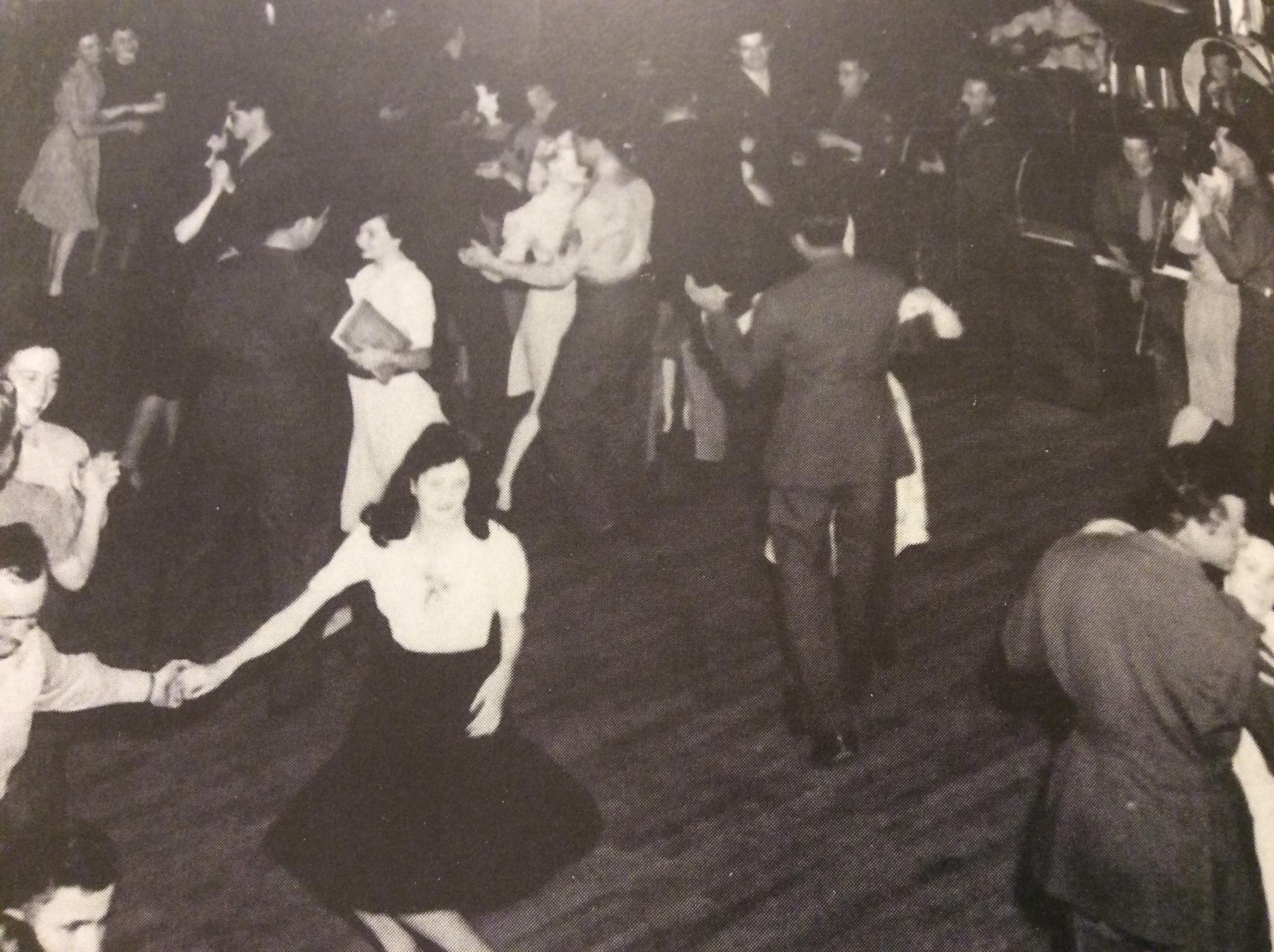
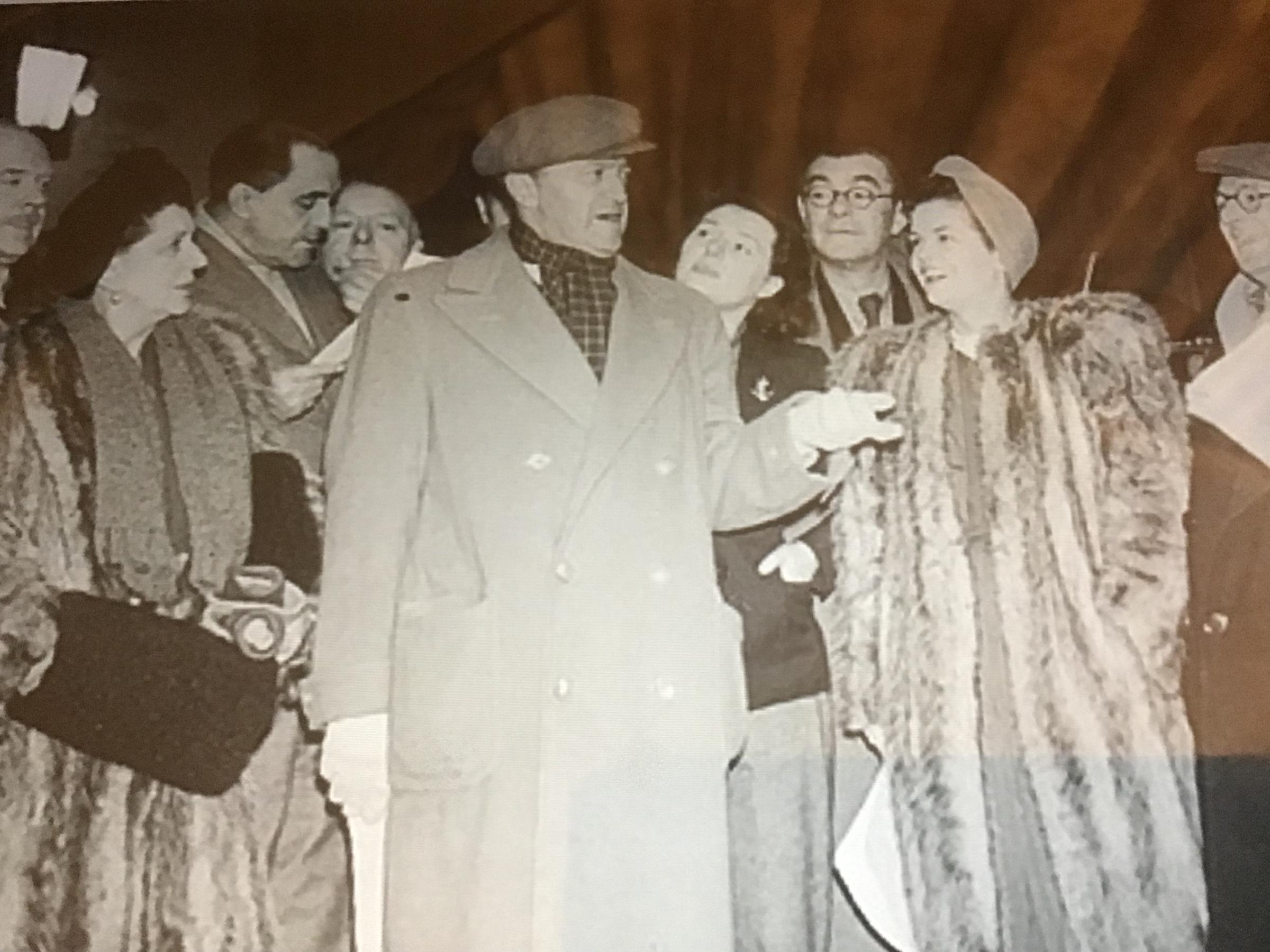
The pictures show the cast of the radio programme “ITMA” with Tommy Hanley in front, a wartime dance and the actors Jimmy Stewart and Clark Gable in air force service in England.