There are thirty-seven names on the Brancaster War Memorial placed in front of St. Mary’s church: thirty-six are of men and one of a woman. Thirty men from the village lost their lives in the First World War, and five men and one woman in the Second World War. One man lost his life in the Berlin Airlift in 1949.
It would be most fitting to write stories about all the sacrifices these thirty-seven people made in the cause of freedom, but some information is either not currently available or completely absent. Previous articles have told the stories of nine of the men commemorated on the War Memorial and this will relate those of three men who lost their lives in the Mediterranean Theatre in 1943 and 1944. It is hoped that all these narratives will serve as a fitting commemoration for those named on the War Memorial. As the inscription on the Kohima Memorial in Burma reads so poignantly: “When you go home, tell them of us and say: For your tomorrow, we gave our today.”
Until the invasion on the Normandy beaches in 1944, British military forces were heavily engaged in the Mediterranean Theatre and Burma. From 1942 onwards American forces joined the British in the Mediterranean, albeit reluctantly. The conflict in this area involved most countries bordering on the Mediterranean Sea, including those in North Africa, Southern Europe and the Middle East, with the notable exceptions of Spain and Turkey. Although I use the term “British forces”, it should be remembered that there were substantial forces from the Empire involved in the area.
The mediterranean region was of strategic importance to the British, who effectively controlled Egypt as well as having a presence in Gibraltar, Malta and parts of the Middle East. Egypt, of course, controlled the Suez Canal, which was the gateway for trade and, crucially, for Middle East oil.
It is a little-known or publicised fact that British and American forces carried out three major seaborne invasions in the Mediterranean before the D-Day operation in Normandy. The first of these was Operation Torch in November 1942, which involved the invasion of Morocco and Algeria, aimed at creating a pincer movement on the German forces facing the British in Egypt. This operation was assisted by the British victory at El Alamein, just before the Torch landings. The British and American troops moved along the African coast towards Libya, while the British also moved through Egypt, following El Alamein, pursuing the defeated German forces. The Germans eventually surrendered in Tripoli, with huge losses in terms of prisoners.
It was during this extended operation to clear North Africa of the German forces that Flying Officer Hawley, aged 20, lost his life supporting the Allied forces; he was the son of Mr and Mrs Hawley of Brancaster, and was buried at La Réunion War Cemetery in Algeria.
The war in countries bordering the Mediterranean included the Middle East, Lebanon, Syria, Iraq and Iran. A pro-fascist group had seized control in Iraq and, conspiring with the Germans, threatened to bring chaos to the region. This had implications for the safety of oil fields that the British relied on and also posed the threat of a potential pincer movement on the Suez Canal, with Rommel’s Africa Korp rampant in Libya and Western Egypt. Britain mobilised forces, including a substantial Indian contingent, to bring order to the area and, in particular, to oust the pro-fascist group in Iraq.
The Leicestershire Yeomanry Royal Artillery were part of the operation to bring order to the Middle East region. Lance Bombadier Sutherland was a member of this unit and lost his life on 27th September 1943; he was the husband of Lucy Sutherland of Brancaster and was 29 years old. Lance Bombadier Sutherland is buried in Beirut War cemetery in Lebanon.
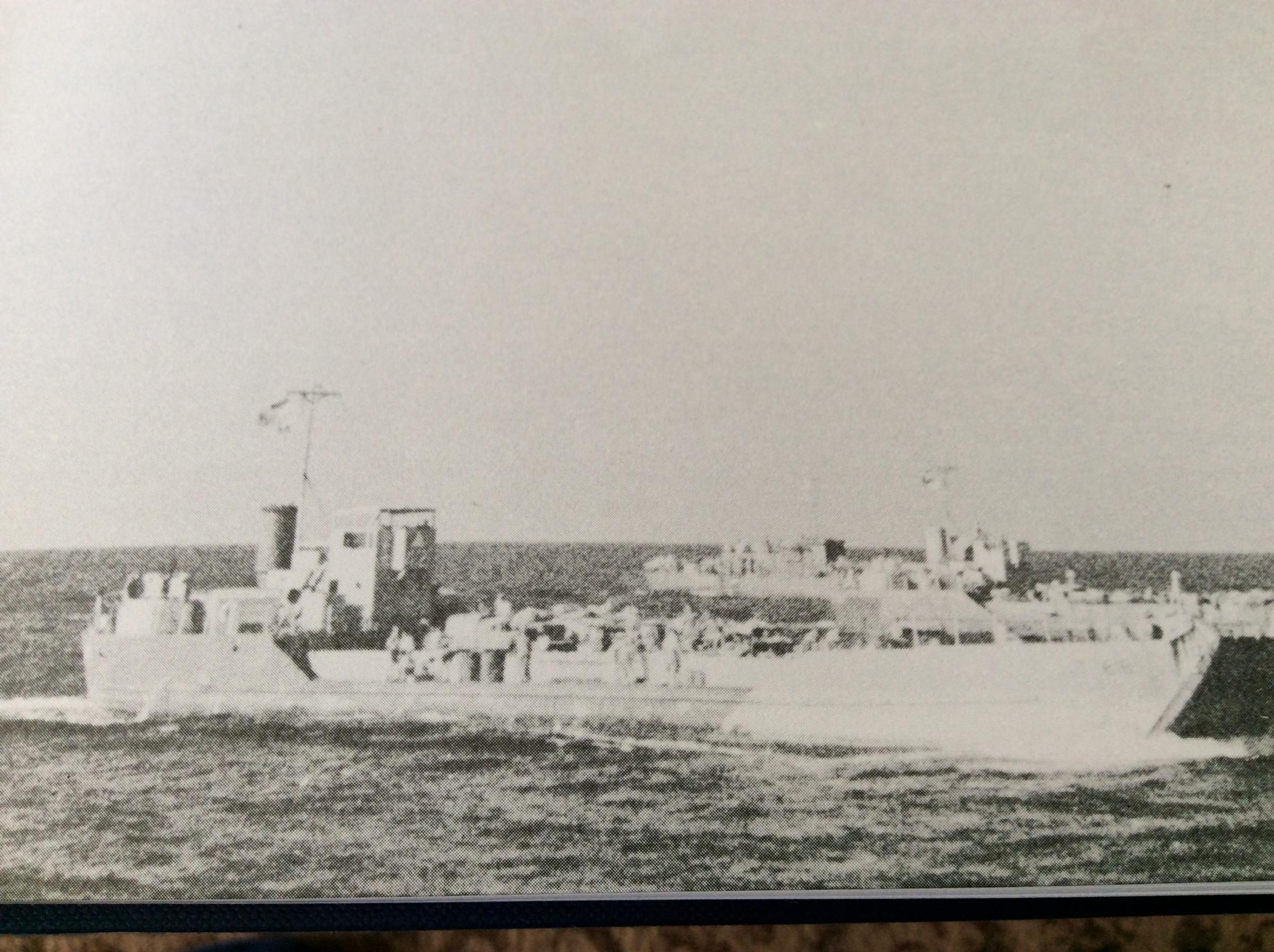
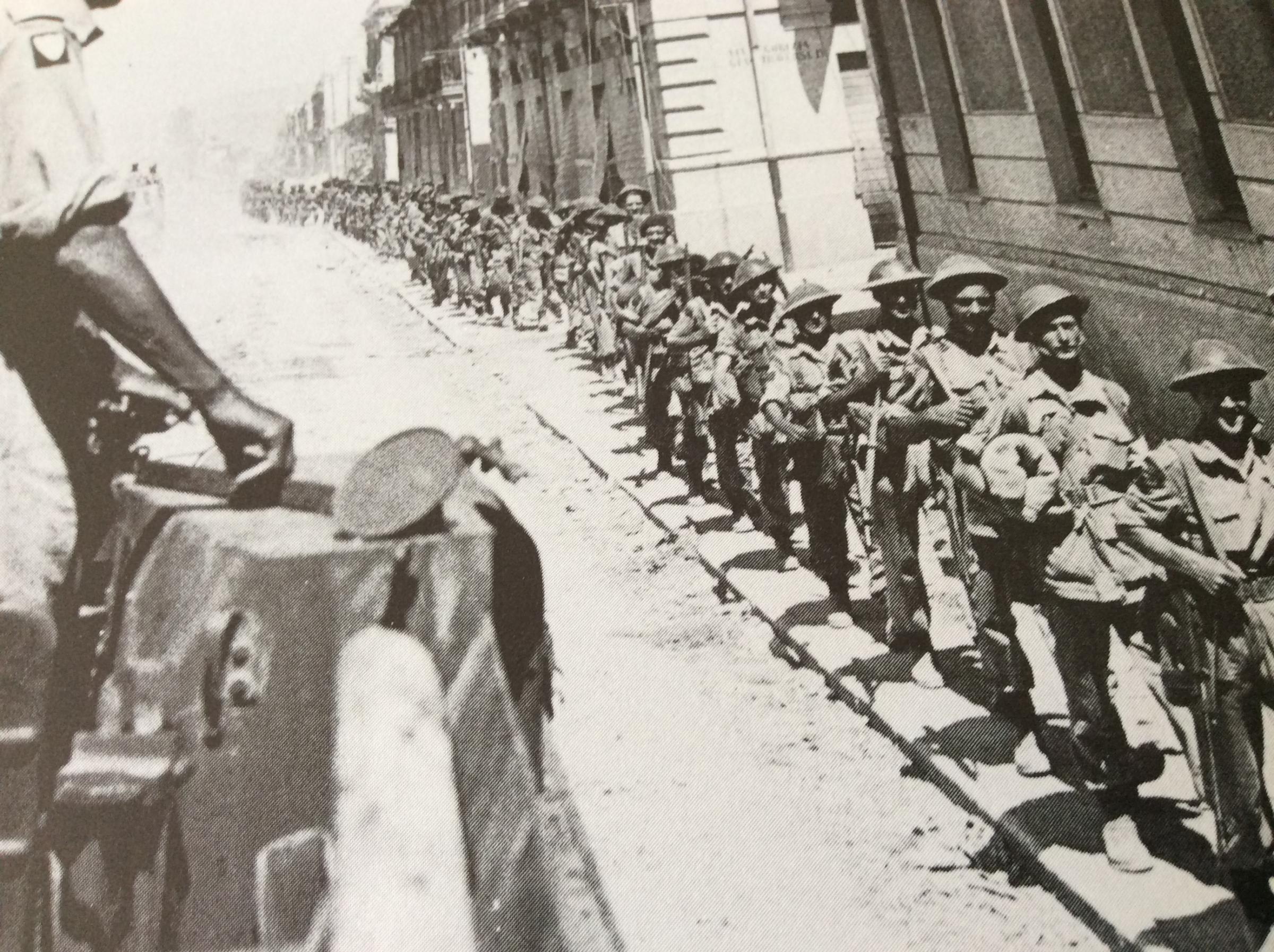
Following the Allied success in North Africa and the surrender of substantial German forces, it was agreed to mount an invasion of Sicily, code-named Husky – in July 1943. After a short but costly campaign, Sicily was occupied by the Allied forces. On the mainland the political situation went into crisis; Mussolini was deposed, and the Italian Government surrendered to the Allies on 3rd September 1943. Also, in September the British landed on the mainland in the Calabria region at the toe of Italy: a few days later the British and American forces landed further north, at Salerno. From these two landings the main campaign on the Italian mainland began – which lasted for the rest of the war – against very fierce German resistance. The Germans had anticipated the Italian surrender and occupied the country. This was a brutal struggle in an unforgiving landscape as the Allies advanced at a snail’s pace up the spine of the Italian mainland and resulted in a great loss of life.
The Royal Wiltshire Yeomanry RAC were part of the forces participating in the Italian campaign. Lieutenant Gilliat, a member of this unit, was involved in supporting advances in the Florence region, where he lost his life on 1st August 1944. Lieutenant Gilliat was 22 years old and the son of Major and Mrs Gilliat of Brancaster; he is buried at the Arezzo War Cemetery in Italy.
The campaign in Italy is often overlooked, as the events in France following D-Day were the main focus of the media and, therefore, of the public. As with the exploits of the 14th Army in Burma, the sacrifices of forces were often forgotten in the emphasis on events on the Western Front as the Allies progressed into Germany. However, to the people who served and the families who were affected, these events were very real and, in many respects, tragic.
The pictures show British troops on the march through Italy and landing craft making for the Italian coast as part of the invasion of the mainland.