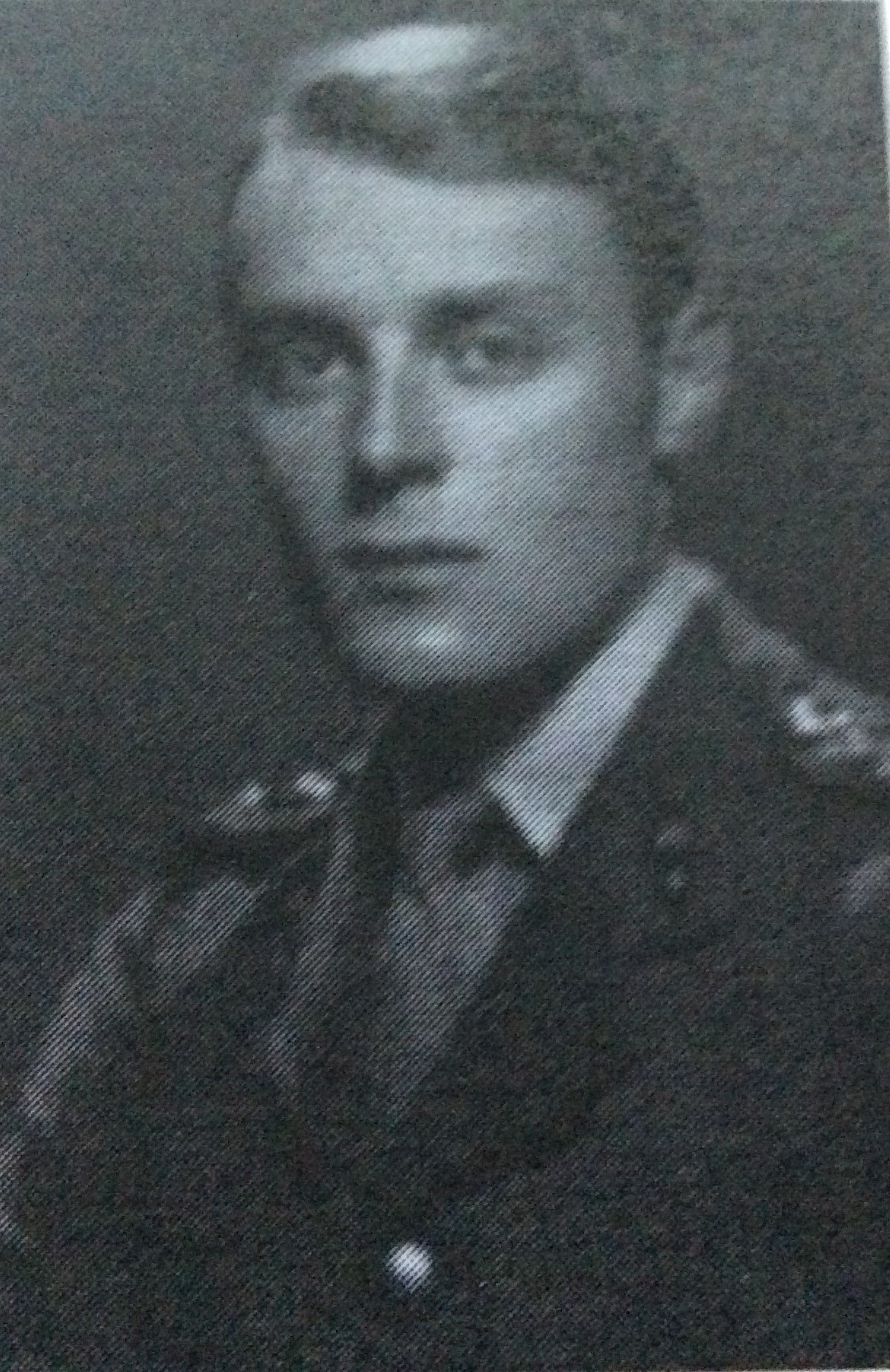
Julian was born in August 1916, the eldest son of Sir Geoffrey and Lady Felicity Cory-Wright, into a family that was well-connected in the business, entertainment and society worlds. Sir Geoffrey and Lady Felicity lived in Brancaster, and Julian had a number of younger siblings, including four brothers.
Like the young Churchill, Julian was influenced in his early life by his governess, whom he called Scrivy (Olive Scrivener), who joined the family in 1923 to help take care of the growing family. Scrivy encouraged the young Julian’s latent talents, particularly his sketching and drawing.
Julian was educated at Sandroyd and Eton Schools, where he was a popular student, excelling at mathematics and painting – particularly watercolours – as well as being a useful cricketer. He took to the water early on and was a keen yachtsman in local Brancaster waters.
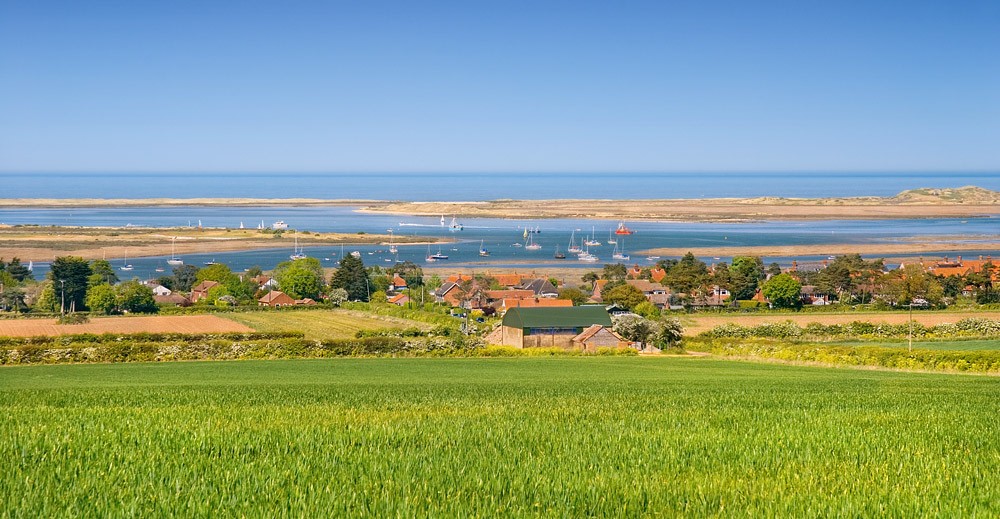
On leaving school, after a short stint teaching mathematics at Eton, he became an articled clerk, working towards an accountancy qualification and career. He was called up in 1939, before he could sit his final examinations; he joined the Hertfordshire Yeomanry. Julian continued to spend his holidays sailing his 12ft boat “Sanderling” at Brancaster and became a founder member of the Brancaster Staithe Sailing Club; he was also an active member of the Royal West Norfolk Golf Club. Spare moments were still spent sketching and painting, particularly seascapes, the marshes and fishing boats. Julian married Susan Elwes in 1940 with whom he had three children over the next 3-4 years, making their home in Brancaster Staithe.
In 1942 his unit was incorporated into the Royal Artillery, and he spent from 1942 to 1944 on training exercises in various parts of the country; his unit was the 177th Battery 181st Field Regiment, which was part of the 15th (Scottish) Division. During the unit’s training Julian continued to sketch and paint the places where these exercises took place.
In 1944 Julian’s regiment was moved to Worthing, prior to being sent across to Normandy in support of the Allied landing carried out on D-Day. They embarked on the US Liberty Ship “Fort Biloxi” at Tilbury, where there was a lot of delay as other units and vehicles were loaded; Julian produced many sketches at this time of what he saw on board the ship. The vessel sailed out on 13th June and joined a convoy to be escorted across to Normandy.
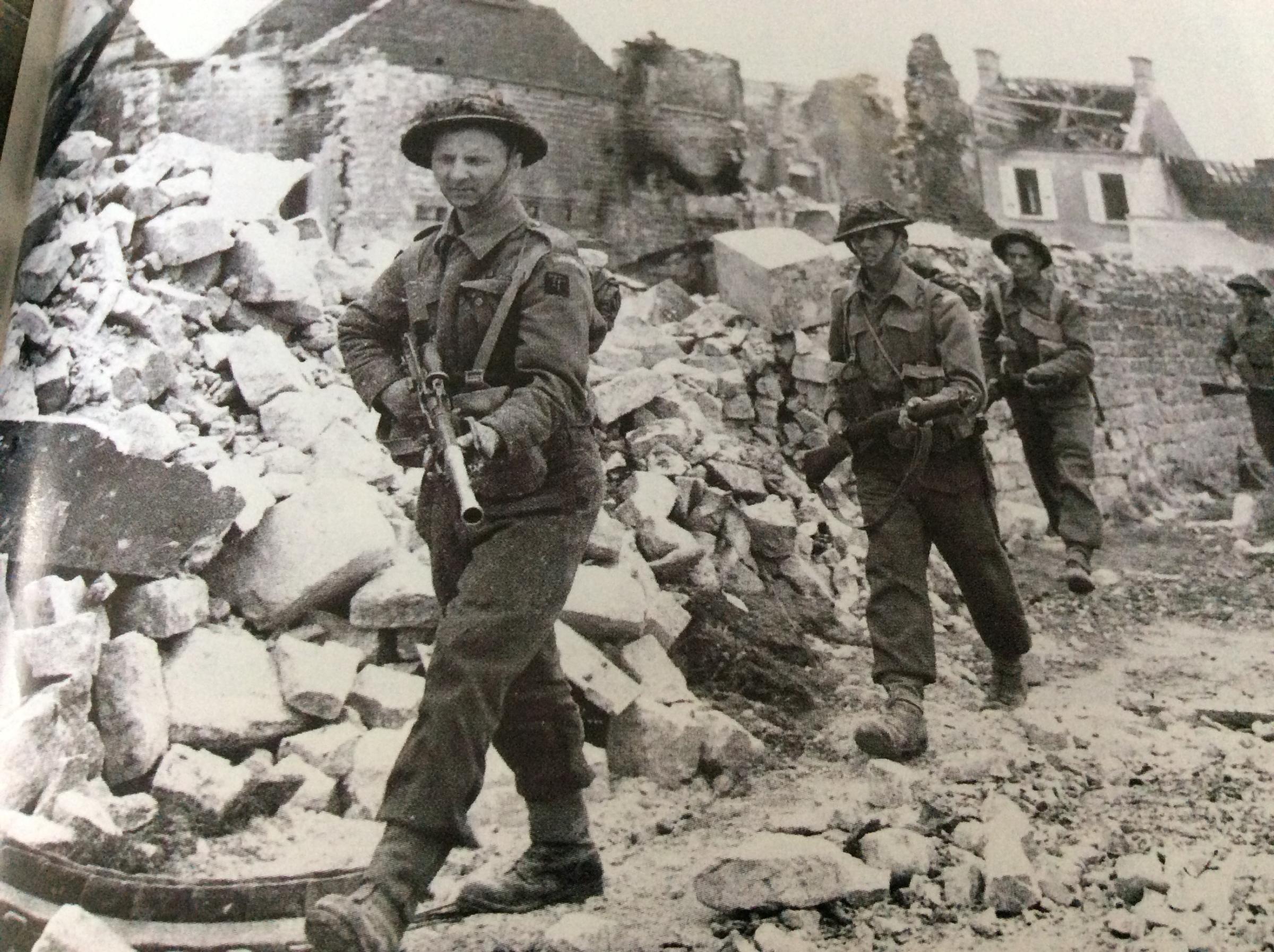
On reaching Normandy the weather and stormy sea conditions meant that it took time to load troops, vehicles and equipment into the LST’s and Rhinos to carry them to the shore; it was not until 22nd June that the whole Division was finally ashore on the beach code-named Gold.
Julian’s unit took part in its first action, Operation Epsom, which was an attempt to take the key city of Caen. Julian was a Forward Observation Officer for his artillery unit, with the job of identifying places from which artillery could be directed to cause maximum effect on the enemy. On the morning of 26th June Julian and his party as assistants began to move towards St. Manvieu, which was to be their Observation Post position. A shell landed near his position, and he was killed by the burst of shrapnel. He was buried initially where he as killed but was subsequently moved to the British Cemetery at Tilly-sur-Seulles.
Julian is remembered today for the sketches and paintings he made while on the ship travelling to Normandy and during his time off the Gold Beach: these are important historical documents. In his letters that he wrote in his time there he described his journey to Normandy in the convoy: “The whole convoy, when finally arranged in their proper order, was a terrific sight. I painted and sketched all day long in an effort to catch some of the sights, sights which I shall never be able to describe with the pen”. Even more poignant, when he arrived on the Normandy beach: “I might have been sailing in “Sanderling” straight in at the beach, at low tide, off of the golf course, it was that simple”.
Three of Julian’s brothers also served in the army, two of the in the Scots Guards and one in the Royal Artillery; unfortunately, his brother Jonathan was also killed when serving in the Scots Guards in France at a later date. Julian and Jonathan are remembered on the Brancaster War Memorial and on a plaque inside St. Mary the Virgin church in Brancaster, as well as on the Memorial Gate of the Royal West Norfolk Golf Club.
It is a testament to his character that Julian’s only concern was for his men. Sergeant Signaller John Bramald reported that, after the shell exploded, Julian’s last words to him were “Are you all right?”, to which he replied “Yes, Sir” before Julian lost consciousness.
The pictures show Captain Cory-Wright, British soldiers moving inland from the Normandy beach on D-Day and a watercolour of Brancaster Staithe harbour by Julian Cory-Wright.