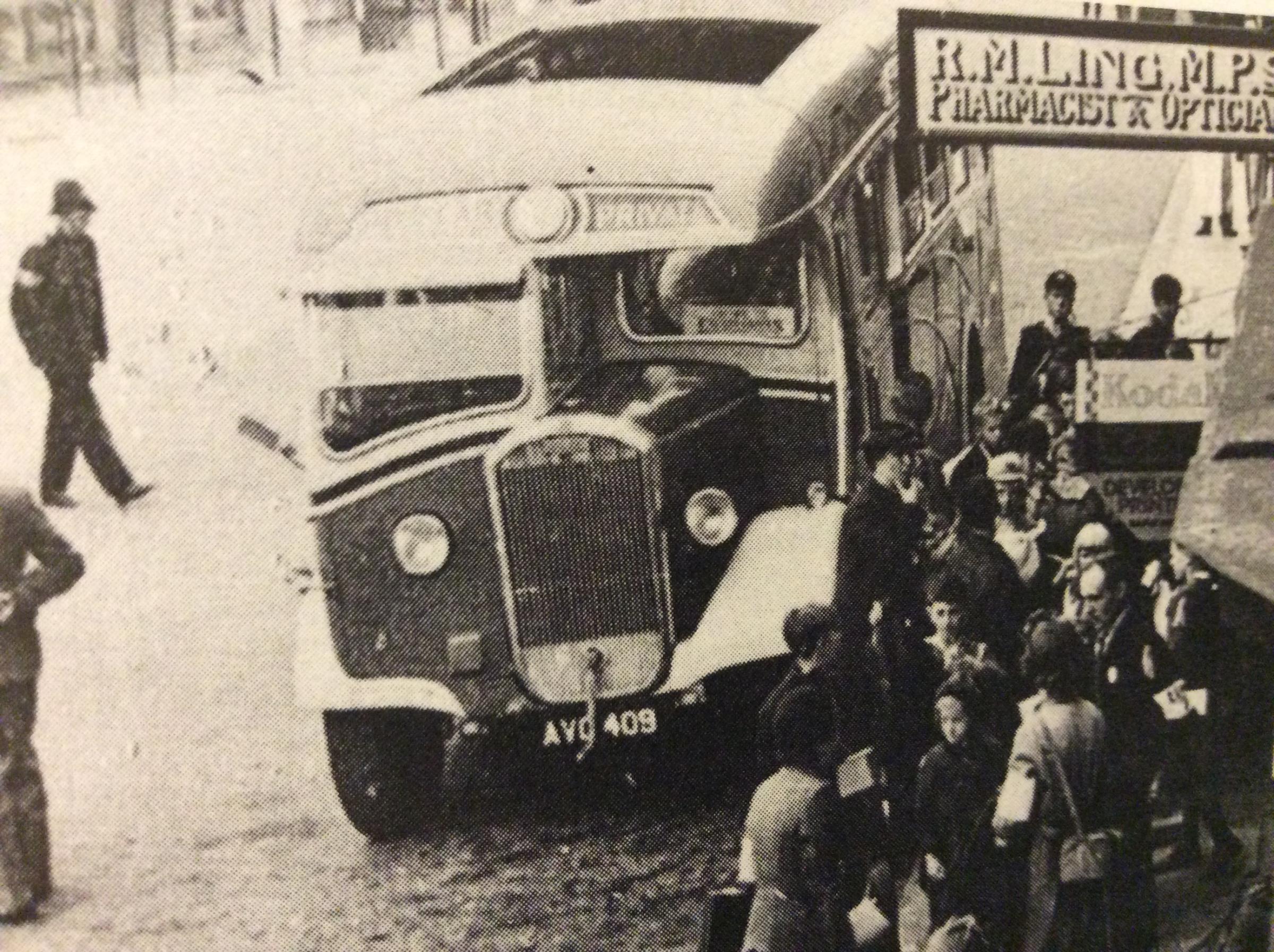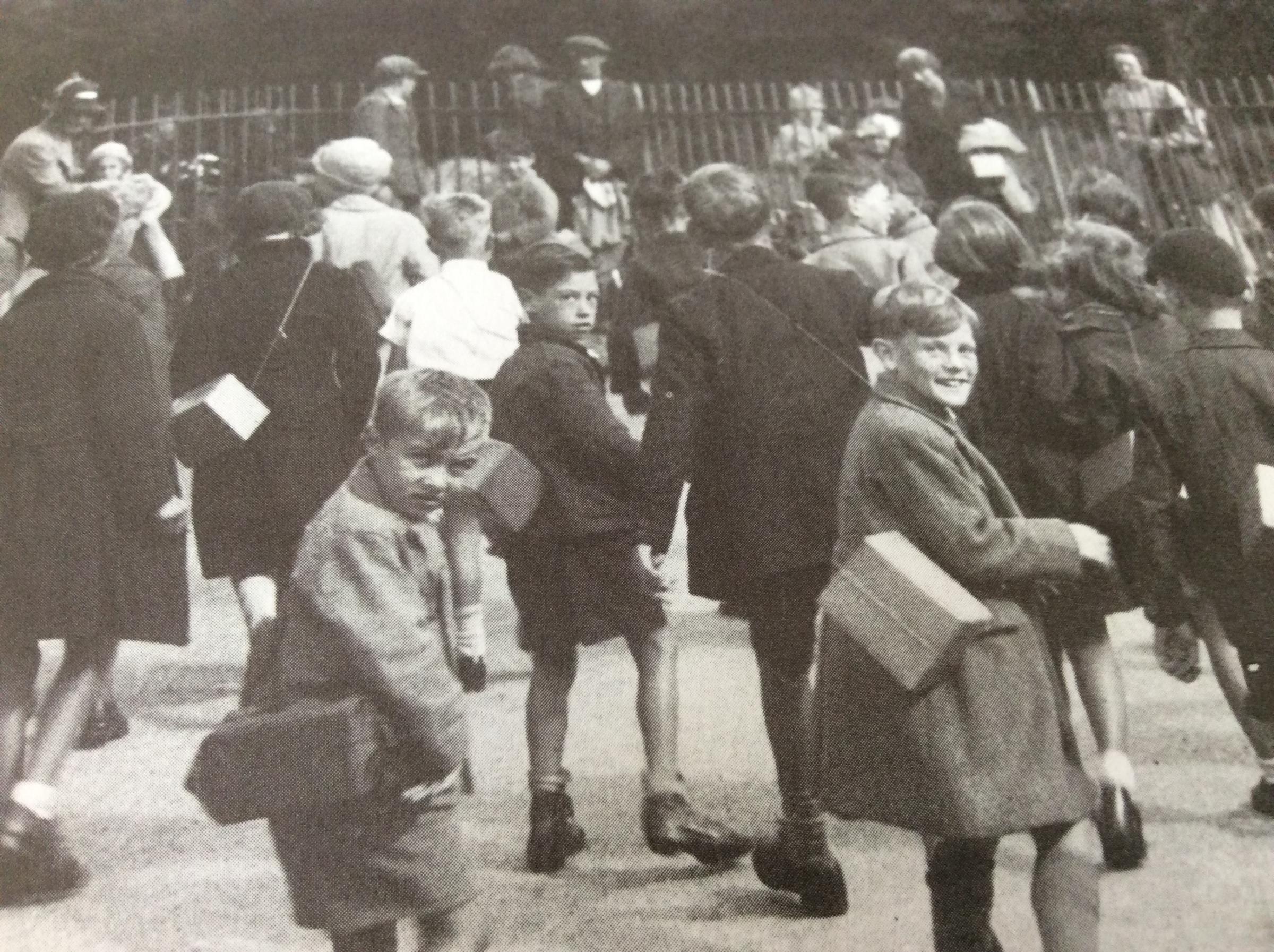
When World War Two broke out in 1939 many women and children were evacuated from the cities to rural areas in order to be safe from anticipated air raids. In Norfolk the evacuation took effect very early, with 20,000 children arriving in Norwich over four days, with others coming in at Norfolk ports. (See picture of children arriving in Norwich: note they are all carrying gas masks). Initially evacuees were housed in schools and given medical checks before being moved to their billets in Norfolk villages across the county. Many of the children arrived without warm clothing to face the Norfolk winter, and some had no idea about table manners or basic hygiene. These lacks caused some distress to rural village families who were recipients of the evacuees.
At the start of the war people in Norfolk tried to retain as many elements of their pre-war lives as possible. Cinemas and theatres continued to run and popular films included stars such as George Formby and Robert Donat. The radio was, of course, the main source of entertainment and information; “ITMA” with Tommy Handley was hugely popular. Songs by Flanagan and Allen and Vera Lynn were all the rage and helped keep up people’s spirits.
In the coastal villages of Norfolk, the threat of invasion meant that people were evacuated, or chose to leave. There were increasing numbers of troops stationed in the area and most beaches were declared out of bounds, with pillboxes and barbed wire much in evidence. By 1941 Norfolk coastal towns had lost about half their populations, causing severe problems for councils and local businesses. At the height of the Blitz in London more evacuees arrived in the small rural villages. In some areas the initial enthusiasm of villagers to help began to pall with the numbers to be coped with. Many evacuees were treated with understanding and kindness; others, however, were less fortunate and were faced with awful conditions and poor food. Food parcels sent by family members were sometimes stolen, and a minority of evacuees had a tough time. Many evacuees of all ages found work on local farms or in local businesses. The importance of food production meant that all hands were required at harvest time.
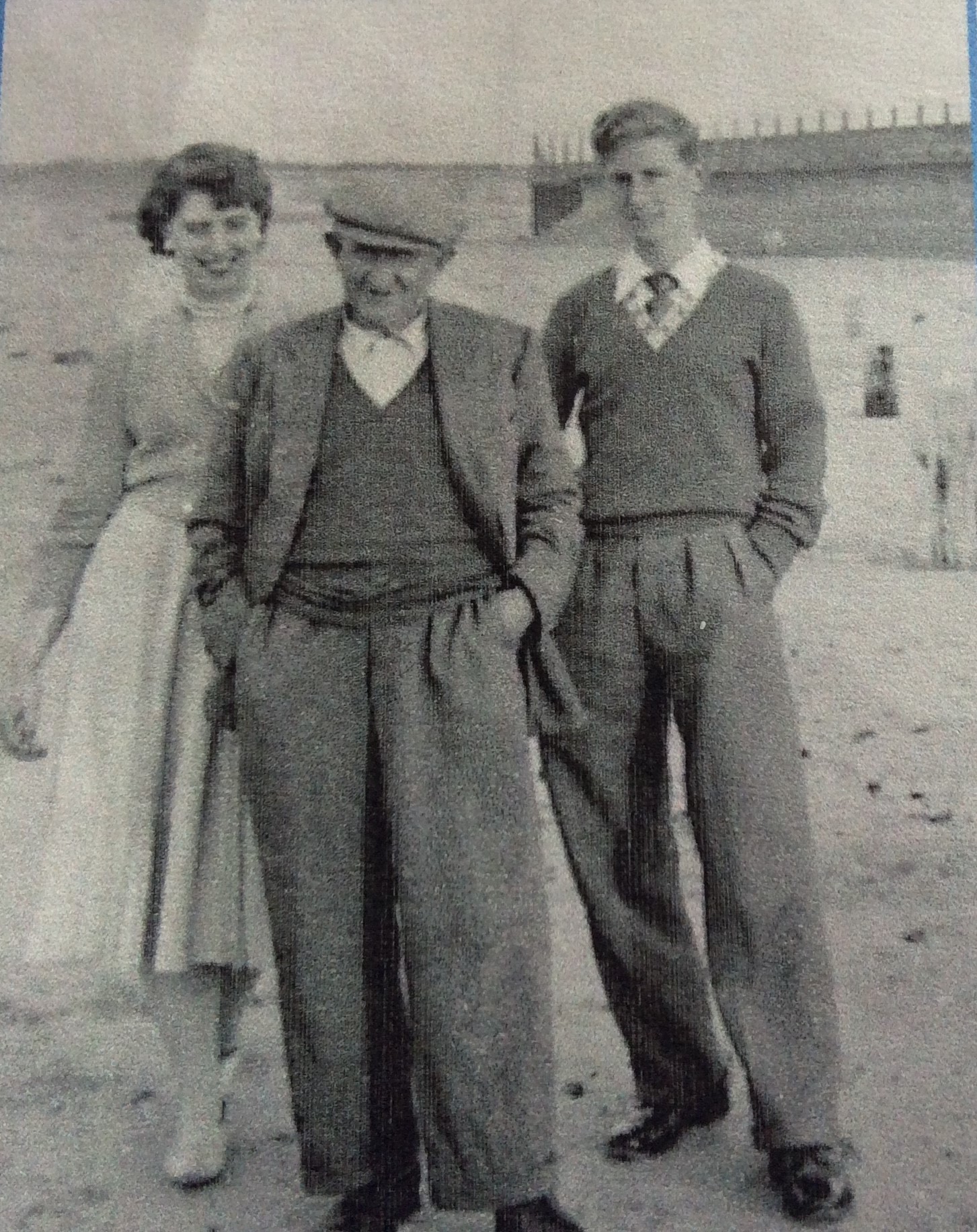
One evacuee who came to Brancaster from London was Stanley Brett; he was lodged with Bert Ellis in a small cottage next to the Post Office. Stanley was in Brancaster for the whole of the war and stayed on afterwards, until shortage of work forced him to return to London. (See picture of Stanley on Brancaster beach with Bert Ellis and Stanley’s girlfriend, Daisy Townshend). Stanley wrote many poems about his experience in Brancaster; one entitled “Wartime Evacuee” is set out below:
WARTIME EVACUEE
I caught the train from London, with many thousands more. First of September ’39 as the world prepared for war,
I came to escape the havoc that was very soon to start, and changed from a Cockney, born and bred, to a Norfolk boy at heart.
When I arrived at Brancaster to a future then unknown, A homely couple sheltered me, treated me as their own,
They clothed and fed and gave to me a new and safer start; the atmosphere transformed me to a Norfolk boy at heart.
And every year at harvest time, I’d follow the binders round, till rabbits broke from cover, when I’d try to run them down.
I learned to holler “Hold ye” – and lead the barley cart: great fun and a great experience for a Norfolk boy at heart.
I spent long hours out on the farm and learned the farming ways – topping swedes and sugar beet and turning sun-bleached hay,
I served the straw for thatching, long since a dying art, but vividly remembered by a Norfolk boy at heart.
I played in local football teams and sang out in the choir: newspapers, milk and telegrams were delivered when required.
I entered into village life and played a fulsome part; completely integrated was this Norfolk boy at heart.
I took up with a village girl when we were both sixteen: no modern promiscuity, no pill yet on the scene,
Together over thirty years, me and my first sweetheart: marriage vows are sacred to this Norfolk boy at heart.
When I returned to London, among the City boys, I had to shout to make myself heard, above the incessant noise.
Then they’d laugh at me and say to themselves “wass ‘e torkin’ abart”, but their accent was foreign to this Norfolk boy at heart.
And now I visit Norfolk each time I get the chance – a wedding invitation, a garden fête or dance,
And I feel a tinge of sadness each time that I depart: a feeling that seems natural to a Norfolk boy at heart.
The Townshend family have been long term residents of Brancaster. Stanley married his girlfriend Daisy, whose brother Alan still lives in the village. Alan married Arline (née Ayres), whose family managed the village shop from 1946. Arline has informed me that Stanley, who has a memorial bench on the village green, wrote a good many poems which are contained in a book; I shall be using some of these with her permission in future features. Could I thank Alan and Arline for their help in writing this article.