This story is about the lives of ordinary people in Norfolk and specifically in Brancaster during the Second World War. This period will cover the 1940s and may usefully be divided into two sections. From 1939 to 1941 Britain had to face up to defeat in Europe and the threat of invasion. The country was very much on its own, along with support from countries in the British Empire, against a Europe that was totally dominated by the Germans, under the Nazis led by Adolf Hitler. Furthermore, it faced growing threats in the Far East, where Japan was flexing its muscles, and setbacks in the Middle East, where Egypt and the crucial transport route of the Suez Canal was under threat.
At the end of 1941 America entered the war when Japan carried out a surprise attack on its fleet at Pearl Harbour, following which Germany and Italy declared war on America. Japan also declared war on Britain and began to threaten British territories in the Far East.
Norfolk was fairly remote from national affairs in the 1930s and, although the coastal regions attracted many tourists, most of these came from within the county, or from Midland and Northern cities. An additional problem for the county in terms of communication was the relatively poor transport links in terms of roads, railways and bus services; the villages were particularly remote from national concerns. When people in Brancaster who stayed in the village in this period were asked what life was like, there was rarely a negative reply: “We had a good time…there were socials at the Institute”. (Simms Reeve Institute, or Brancaster Village Hall). This rather rosy view would change as the war progressed.
The principal occupation of the county was of course agriculture, which was the largest employer. Most of the land was owned by titled landowners on large estates, such as Holkham Hall, or landed gentry, such as Brancaster Hall. They employed people to cultivate the land or care for the livestock; workers lived in tied accommodation or rented housing in the villages. The county did not have much in the way of manufacturing, and what there was centred around Norwich or the other large towns. Being coastal, the county had a strong connection with the sea and a strong fishing fleet; fishing was a major activity at Brancaster Staithe and Wells. In 1939 there were 529,000 people in Norfolk, with 118,500 in Norwich, 50,000 in Yarmouth, 26,000 in King’s Lynn and 4,000 in Hunstanton. The majority of people in Norfolk lived in the small rural villages.
The wages for manual labourers were about £2 per week, and there were lower wages for women who did the same work. In Norfolk a large percentage of women (58%) were employed in domestic service, which was greater than the national figure of 35%. There was a growing middle class in the city and towns of the county. Tourism was a growing industry in the coastal areas of Norfolk, where hotels, boarding houses and restaurants had been increasing in number. There was therefore a need to provide amusements for the tourists; this again provided work for local people, along with businesses to support all this activity.
Given the wages (in pre-decimal currency) people earned, the following are examples of what could be bought within their budget. Butter was 1s 6d per pound, cheese 1s per pound, sausages 1s 4d per pound, sugar 4.5d per pound, apples 1s per pound, coffee 1s 8d per pound a bottle of port 6s and whisky or gin 14s. A dinner service was 10s upwards, a radio £12 upwards, and the ultimate status symbol – a car – from £115 upwards. One should remember that at this time there was no National Health Service; many people paid into schemes each week to be able to access doctors and hospitals when they were needed.
The school leaving age was 14; schooling for many children was very narrow, concentrating on reading, writing and limited mathematics. Many teachers worked hard to add arts and humanities subjects to this curriculum, but money for resources was very tight. Children did get the opportunity, however, to spend time out of school on a variety of activities and sports. It was also the case that, at harvest time, many older pupils would miss school in order to assist on the farms. The production of food became increasingly critical as the war went on.
Shortly after the war commenced a series of regulations were brought in which affected the county. The most onerous was the requirement for blackout, which was rigorously enforced. Volunteers for the air raid wardens, casualty and fire services were recruited, and the Local Defence Volunteers (later renamed the Home Guard) came into operation. Norfolk experienced a large influx of evacuees, mainly from London, as the danger of air raids was faced. Most evacuees were children and sometimes women, who were billeted with local villagers. This was certainly the case in Brancaster, which became home to evacuees for most of the war. Petrol rationing was introduced, and there was a need to carry an identity card. Gas masks were also issued and required to be carried everywhere.
Off the coast, enemy mines and submarines began to take a toll of coastal shipping, and the sight of rescued seamen became a common occurrence in villages, along with the sad sight of sailors who had perished. The RNLI was kept busy around the Norfolk coast, with stations at Hunstanton, Wells and Sheringham.
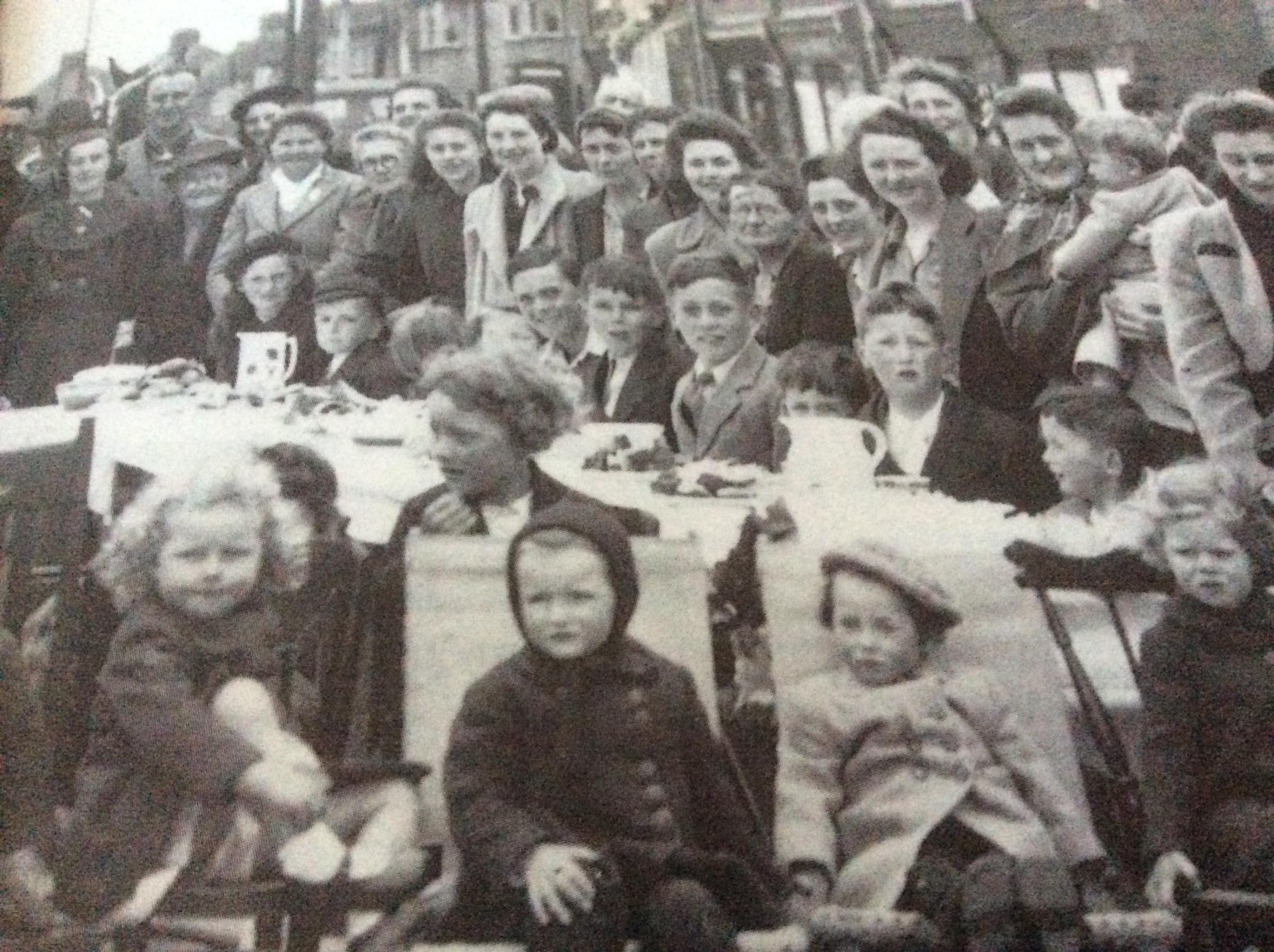
The pictures for these four articles show the following:
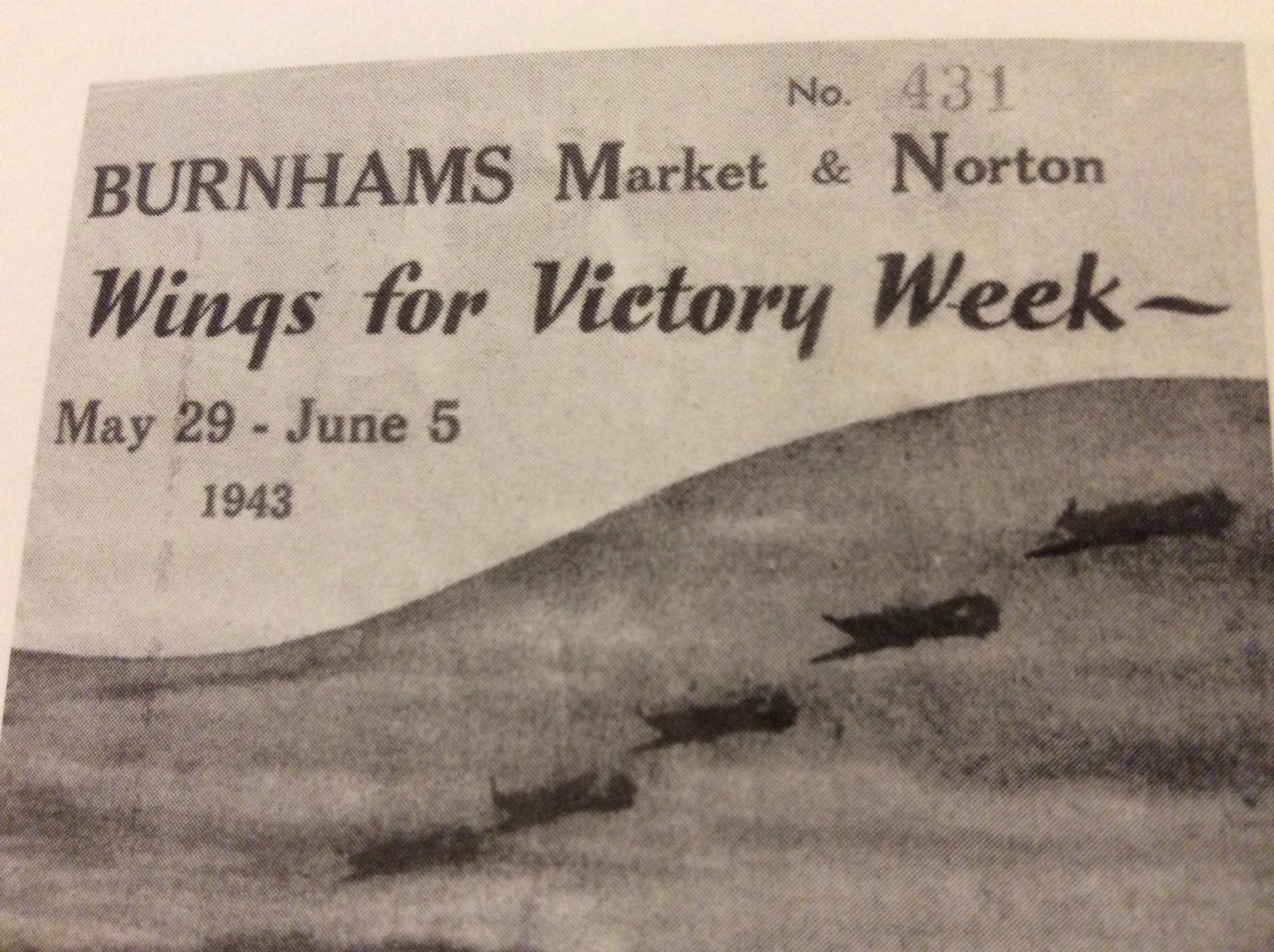
- “Wings for Victory” – an appeal for funds to build aircraft
- Street parties in Norfolk
- Workers at an aircraft factory
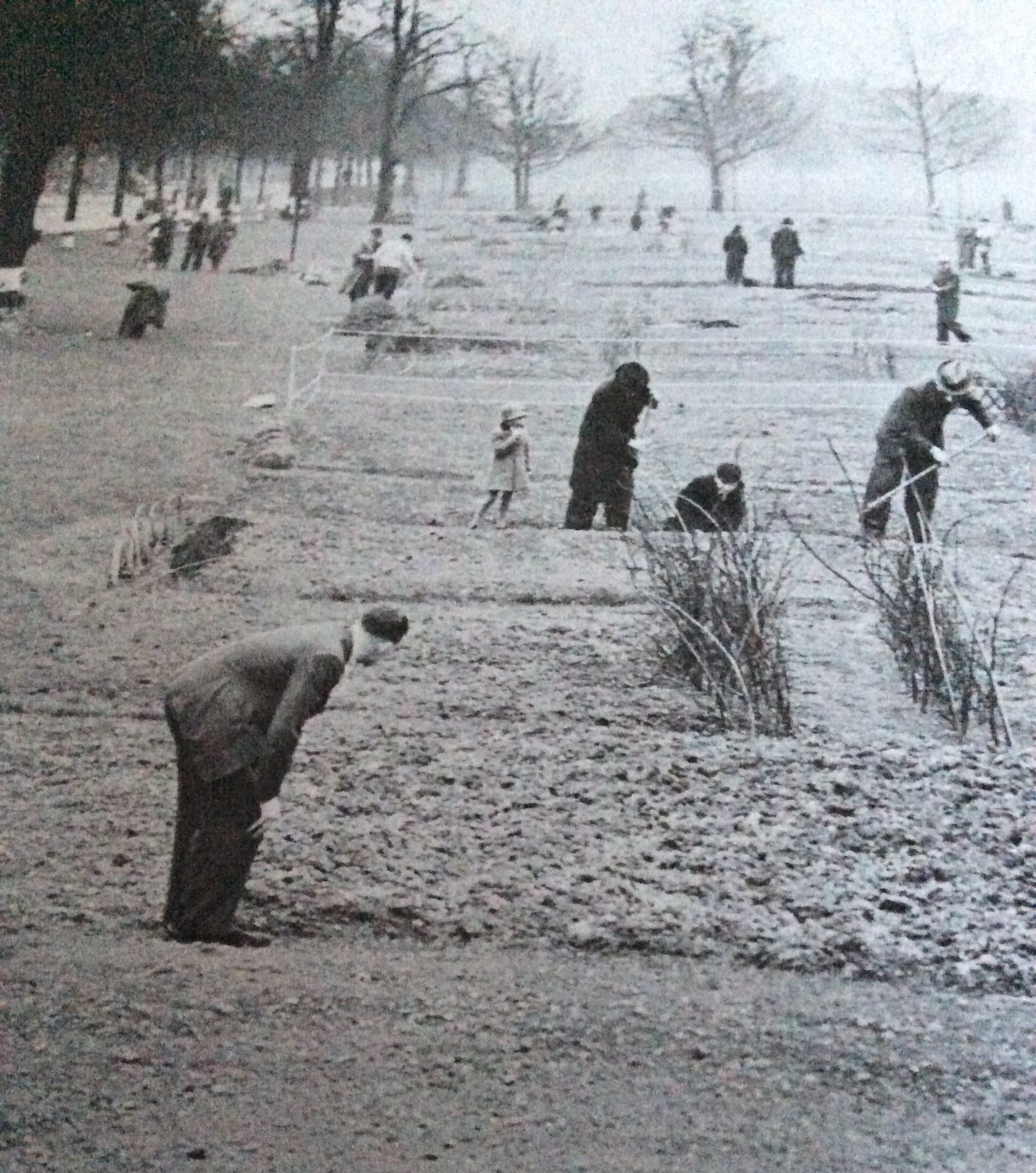
- “Dig for Victory” – the cultivation of a local park to grow vegetables
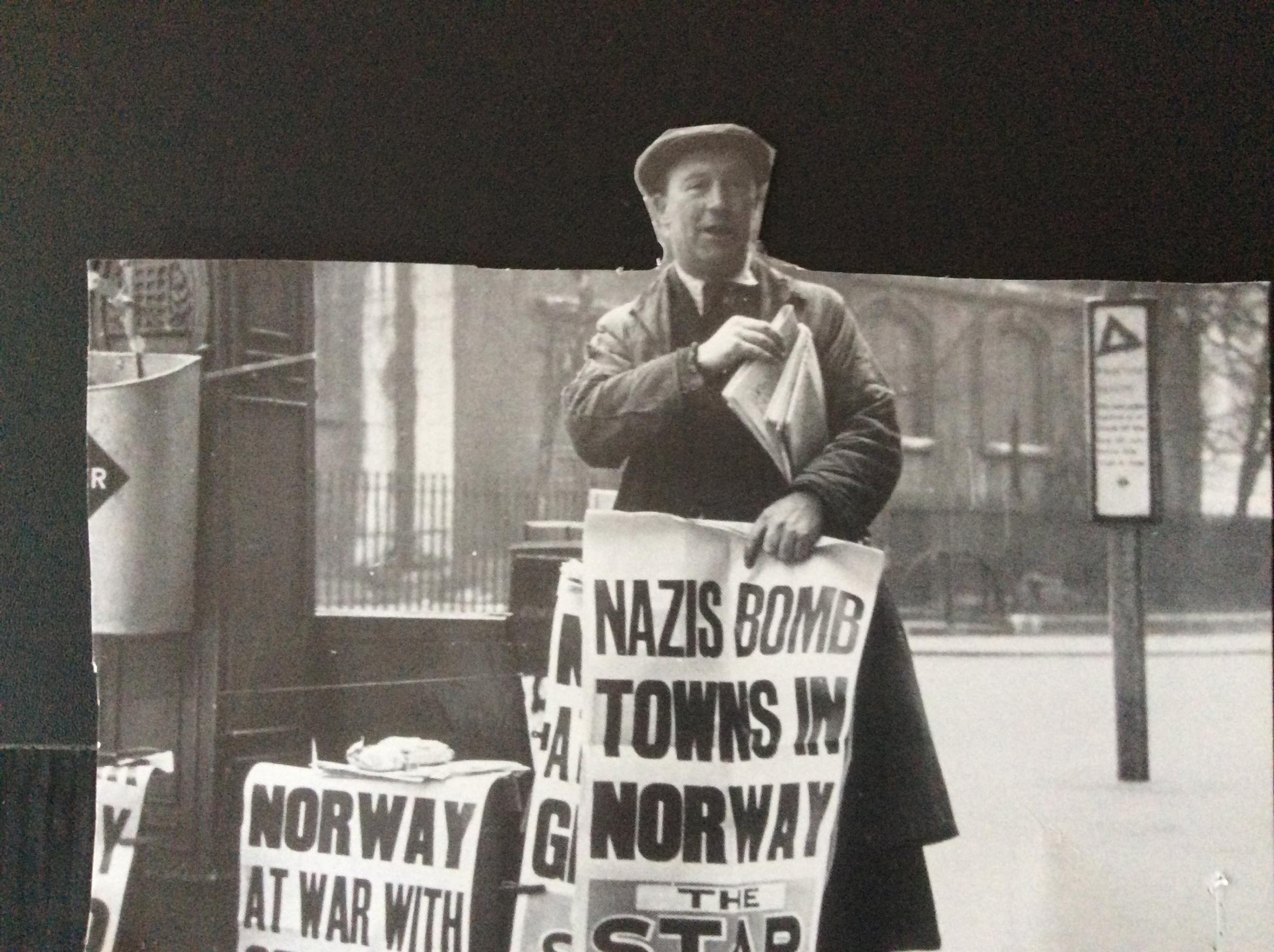
- A newspaper seller
- Women workers at a munitions factory
- Appeal for salvage for war material
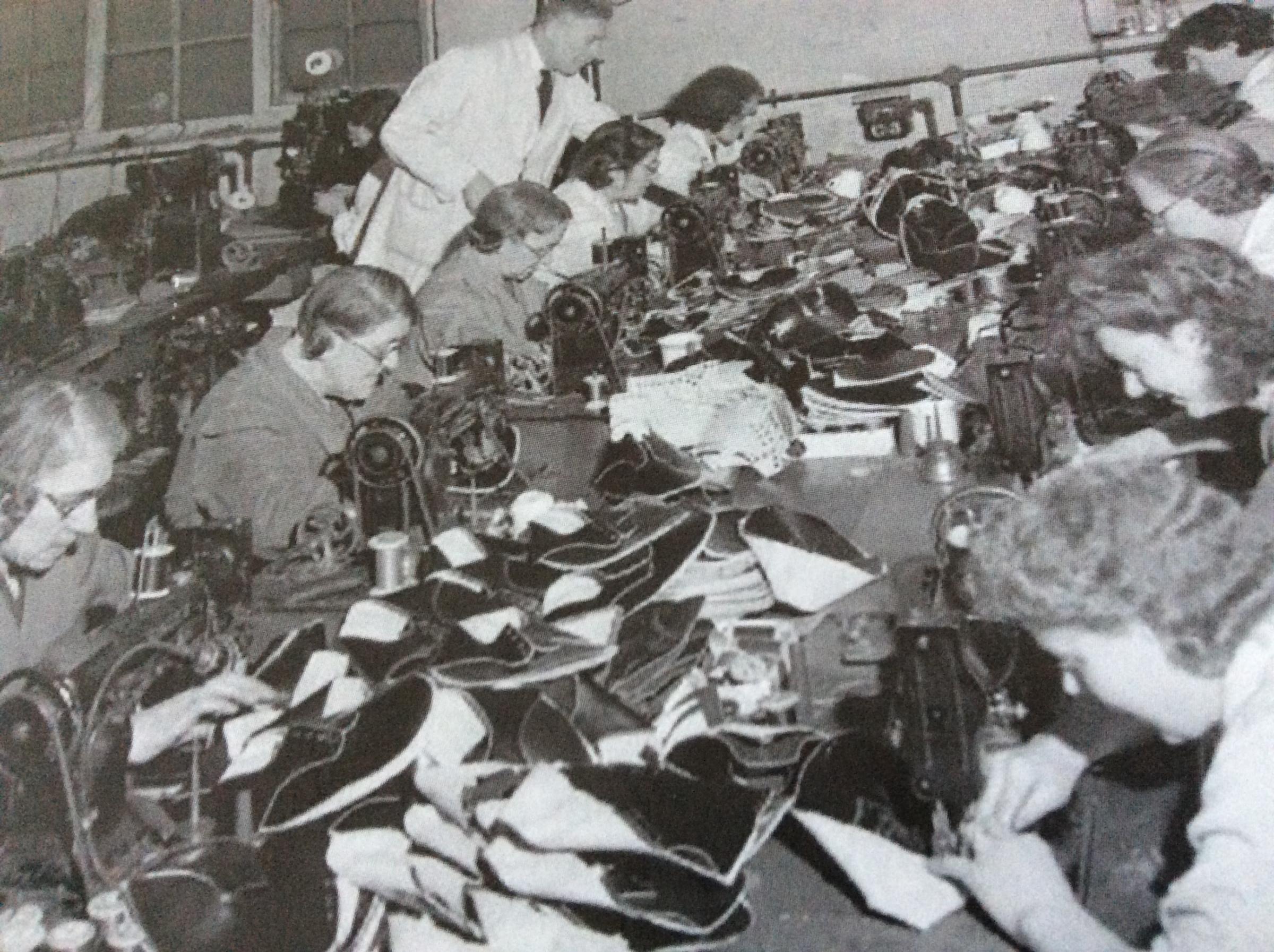
- Workers at a military clothing factory