Throughout the ages Norfolk has always presented a vulnerable coast to potential invaders across the North Sea and has, as a consequence, been a strong focus for the military. This has often meant a military presence and heavy fortifications, many of which can still be seen today. This remained the case during the Second World War where defensive works can be found across the county, including Brancaster, along with the remains of many airfields, such as Bircham Newton and Docking. Interestingly, the same river barriers and lines of protection have featured in Norfolk’s defence down the centuries, including during the Second World War.
With the evacuation of Dunkirk the risk of invasion became very real in people’s minds, a risk which also formed Government policy and featured in speeches by Churchill. In particular people in Norfolk became very aware of their proximity to the German army and air force just across the Channel in Holland, Belgium and France. They were also painfully aware of the wide, sandy beaches along the coast, with little or no defences, which would provide easy access to a determined invader.
In May 1940 General Ironside, in charge of Home Forces, developed a strategy to deal with any possible invasion of Norfolk. As most of the regular army’s equipment had been lost in France, including all its transport, remaining forces existing in the country were largely immobile. Ironside, therefore, focused on static defence, which aimed at slowing down any invading force until reinforcements arrived to stage a counterattack. In Norfolk this meant the creation of a “coastal crust” and then a series of stop lines drawn across the county. Initially Norfolk had two divisions allocated to man these defences, including three battalions of the Royal Norfolk Regiment. These could call on two further divisions – one armoured – in the event of an invasion; these were based in Northamptonshire and Herefordshire.
The first layer of the defence lines was the coastal crust, which contained the beach defences and coastal batteries of guns. Two guns, along with searchlights, were based on Brancaster beach, controlled from an observation post situated at Old Hunstanton lighthouse. Eventually twelve batteries were established along the Norfolk coast, the guns mainly of First World War vintage, that had been mounted in naval ships.
Along with the gun batteries and the garrison troops, the coastal crust strategy included a variety of obstacles and obstructions. These defence measures included a minefield along most of the east coast to protect convoys from naval attack and impede any invasion force. This minefield would have been maintained and patrolled by requisitioned trawlers and drifters, many crewed by Norfolk fishermen who had been conscripted into the Navy. A net was stretched across the Wash to prevent naval incursions. Beach defences included steel scaffold, trenches, mines, anti-tank blocks, barbed wire and, on certain beaches, flame-throwers to set that area of the coast aflame.
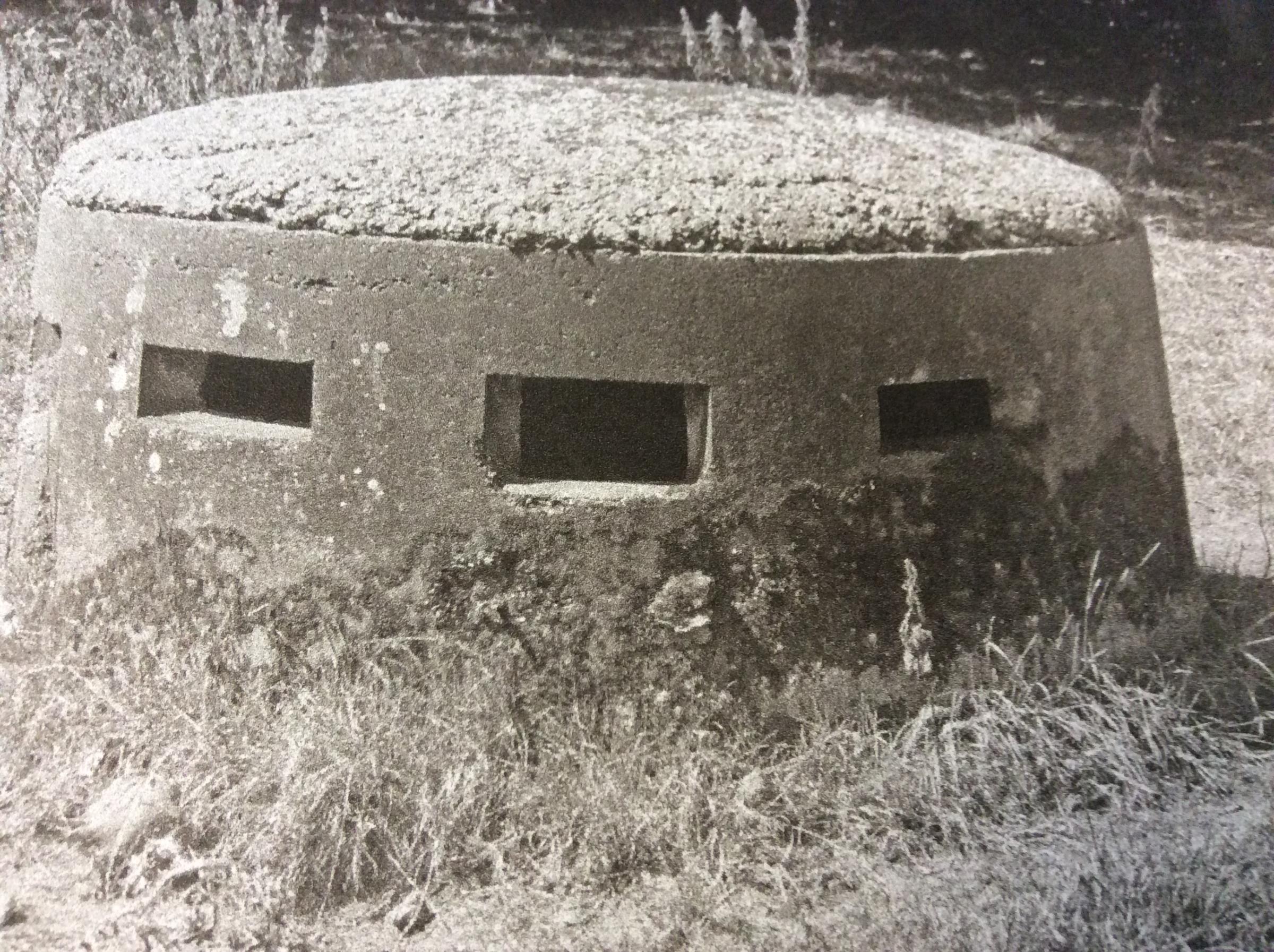
Inland bridges and strategic transport routes were rigged for demolition across Norfolk, and signposts removed, along with all road and survey maps. A large number of pillboxes were constructed and sited at strategic points; one of these strong points can be seen on the seawall leading to Brancaster beach. These pillboxes were built to authorised designs; some were bullet-proof and some shell-proof. Other local pillboxes can be seen in Docking and Heacham.
Ironside designated several stop lines cross the county, which contained tank traps, obstacles, trenches, pillboxes and strong points, all designed to slow an invading force down until reinforcements could arrive. One major stop line, Corps Line A, ran from Burnham Market to Fakenham, then on to Dereham, Norwich and Lowestoft. The great rivers of the county, the Ouse and Nene, were important parts of these linked stop lines.
Also, part of the defences was a number of armoured trains, of which there were twelve nationally; some of these trains were based in East Anglia. They mounted guns and were armoured against small arms fire, and carried out patrols, including those between King’s Lynn and Wells, and would therefore have been seen by local people at Burnham Market and Docking.
As the war went on units of the Home Guard in Norfolk began to take over the coastal and inland defences from the regular army units, who were then released for other duties, often service abroad. These duties included manning the coastal batteries and anti-aircraft defences. In order to thwart airborne or glider invasion and parachutists, obstacles were placed across open spaces. Airfields too were a focus of a range of defensive works, as they could also be used to land airborne troops, as happened on Crete. Airfields, including Bircham Newton and Docking, were surrounded by concentric rings of pillboxes and other defences to contain invaders until reinforcements arrived. Some of these pillboxes could disappear into the ground to facilitate the passage of aircraft. Radar stations, such as that on Barrow Common, were also given special protection.
In all, there were 17 battalions of the Home Guard based in Norfolk, a total of 32,000 men. They would have been a common sight in and around Brancaster, along with regular army units and members of the RAF.
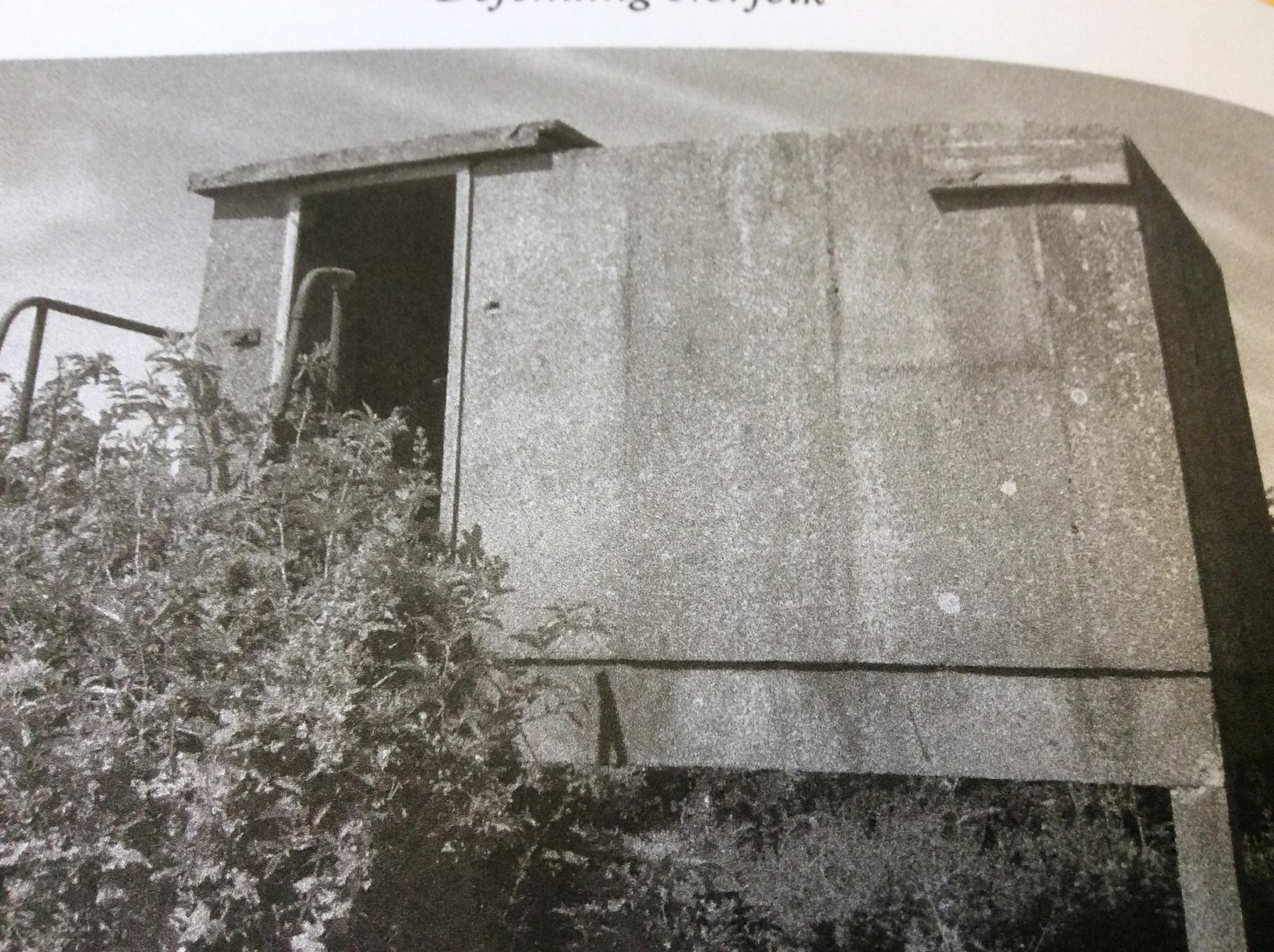
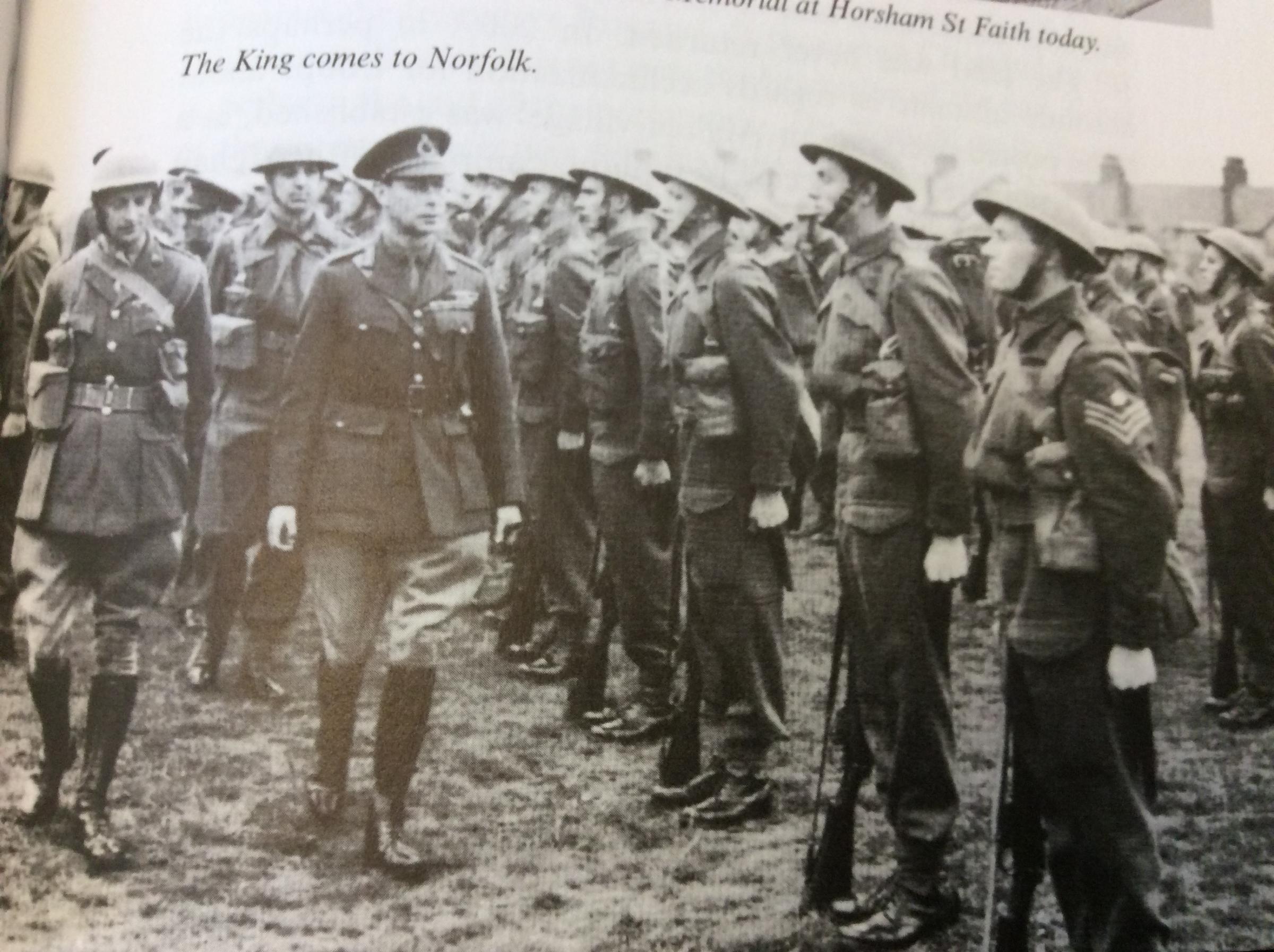
The pictures show HRH King George VI reviewing troops in Norfolk, a pillbox in Docking and an Air Observers Corp lookout post also in Docking.