From 1846 Henry Styleman le Strange made strenuous efforts to develop New Hunstanton – as Hunstanton used to be called, to differentiate from Old Hunstanton – as a seaside resort. The success of this venture meant that the businesses being established needed to attract more and more customers. At this time, 1861, the resident population of Hunstanton was about 500. Henry looked to the railway to provide a cheap and fast method of transporting people to the resort.
The London to King’s Lynn railway had been opened in 1846, and Henry looked to establishing a branch from King’s Lynn to Hunstanton. Following a great effort on his part and a lot of persuasion, the Lynn and Hunstanton Railway was incorporated in 1861 and a new terminus identified at the western end of the resort. Construction of the line and terminus was completed in ten months and opened for traffic on 3rd October 1862, bringing hundreds of people to the Hunstanton seafront.
The new line quickly became a huge success and businesses in the area were soon looking to extend the line along the North Norfolk coast to Wells. To this end the West Norfolk Junction Railway was formed and given Royal Assent in 1864. The new line was constructed from Heacham to Wells to link with the existing Wells to Fakenham Railway, which had been opened in 1857. The line was 18 miles in length and was opened in 1866.
In 1874 the two lines were amalgamated to become the Hunstanton and West Norfolk Railway; in 1890 this was sold to the Great Eastern Railway. As well as passenger traffic the line was important in the transport of goods, contributing to the economic growth of the whole northwest Norfolk coast. The royal connection became increasingly important following the purchase of the Sandringham estate by Edward, the Prince of Wales, in 1862.
In the final years of the century Hunstanton continued to develop as a holiday resort, attracting thousands of visitors. The area became a place where wealthy businesspeople chose to work and travel by train to businesses in London. Travel to the two golf courses at Hunstanton and Brancaster also saw extensive use of the train, with the ability to get to Docking or Burnham Market by the Wells branch, in the latter case.
Up to the 1920s excursion and holiday trains were the dominant traffic, although goods trains were important for incoming and outgoing goods, produce and livestock. A special train, “The Eastern Belle” visited Hunstanton every two weeks. Hunstanton station was extended to four platforms and lengthened to take the new carriages.
After the Second World War there was very heavy holiday traffic on the line and a one-way system was adopted – incoming during the morning and outgoing in the afternoon. In 1949 “The Fenman”, a special train, ran from Liverpool Street to Hunstanton, and Heacham began to flourish as a holiday destination.
From 1950, with the increased use of cars and coaches, the passenger business on the west Norfolk section of the line declined and it was closed to passengers in 1952, although goods trains continued. Flooding of the land on the railway at Holkham in 1953 caused a breach which was not repaired. The line between Heacham and Burnham was retained for goods but closed in 1964 for lack of business.
The 1953 floods also affected the Lynn-Hunstanton line, but repairs were made. Diesel trains were introduced in 1958, but lack of passengers meant that the through trains from Hunstanton to Liverpool Street were withdrawn in 1960. Passenger numbers continued to fall; the platforms at Hunstanton were reduced to one in 1967, and services severely curtailed. All freight was withdrawn from the line in 1964 with the rise of lorry traffic, and the line was finally closed to all business in 1969.
Since then, efforts have been made to restore the line, as it was realised that it could still fulfil an important role for people travelling to the north Norfolk coast. Unfortunately, some of the land that had tracks had been built on: in 2020 the decision to build flats on the site of the station in Hunstanton effectively closed one door on the prospect of the return of the railway.
Railways played a major and critical part in the Second World War, and this was certainly the case with that between King’s Lynn and Wells. Troops needed to be transported, along with their equipment and the railways were the most efficient means in undertaking this. Food also needed to be taken to the areas of population where it was required and again, the railway was the best method for carrying bulk goods. This became even more vital in the run-up to D-Day, which involved the mass movement of troops and equipment to the South coast. It is therefore important that the development of the GWE railway in this area should be included in any account of the Normandy landings.
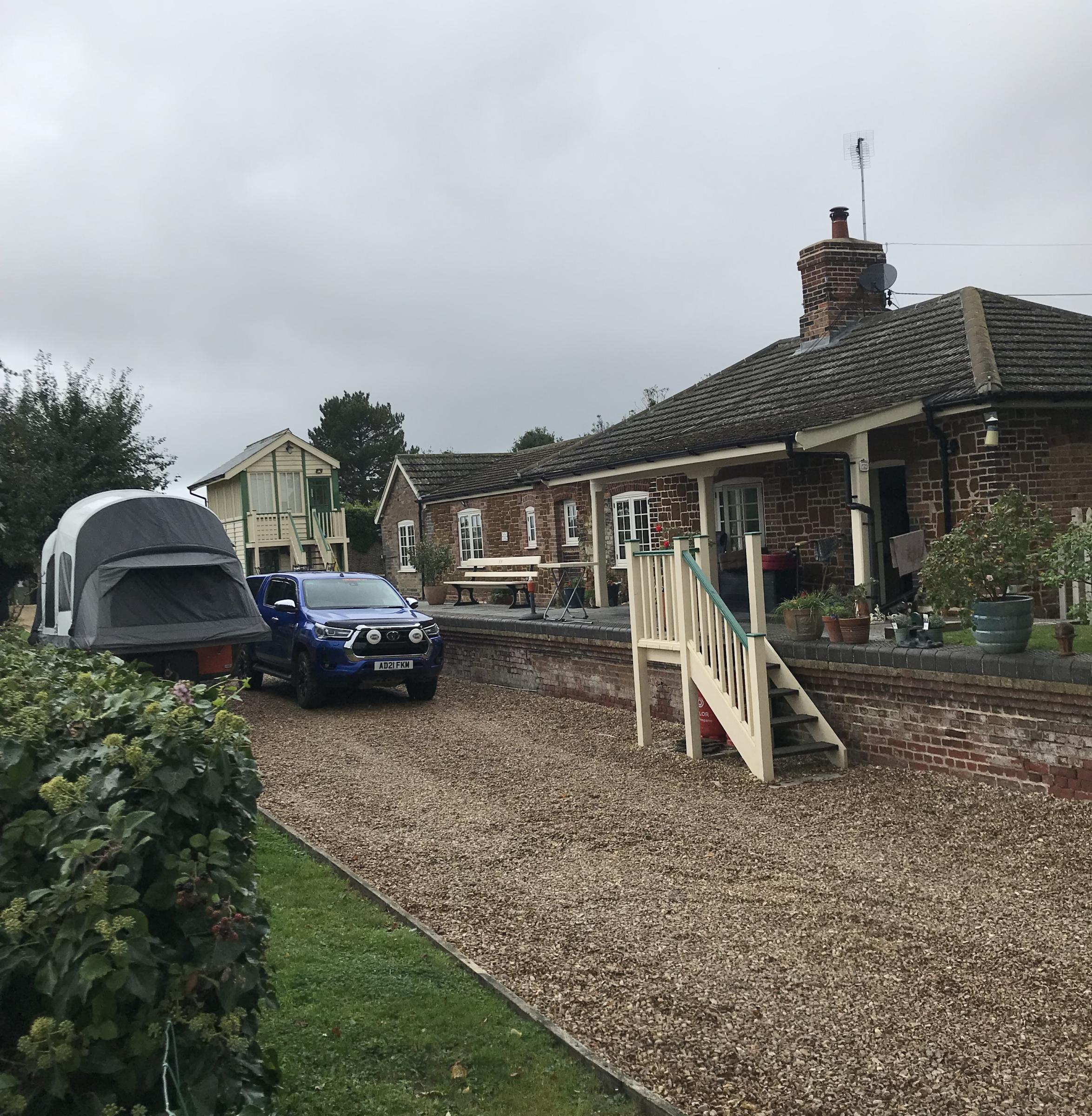
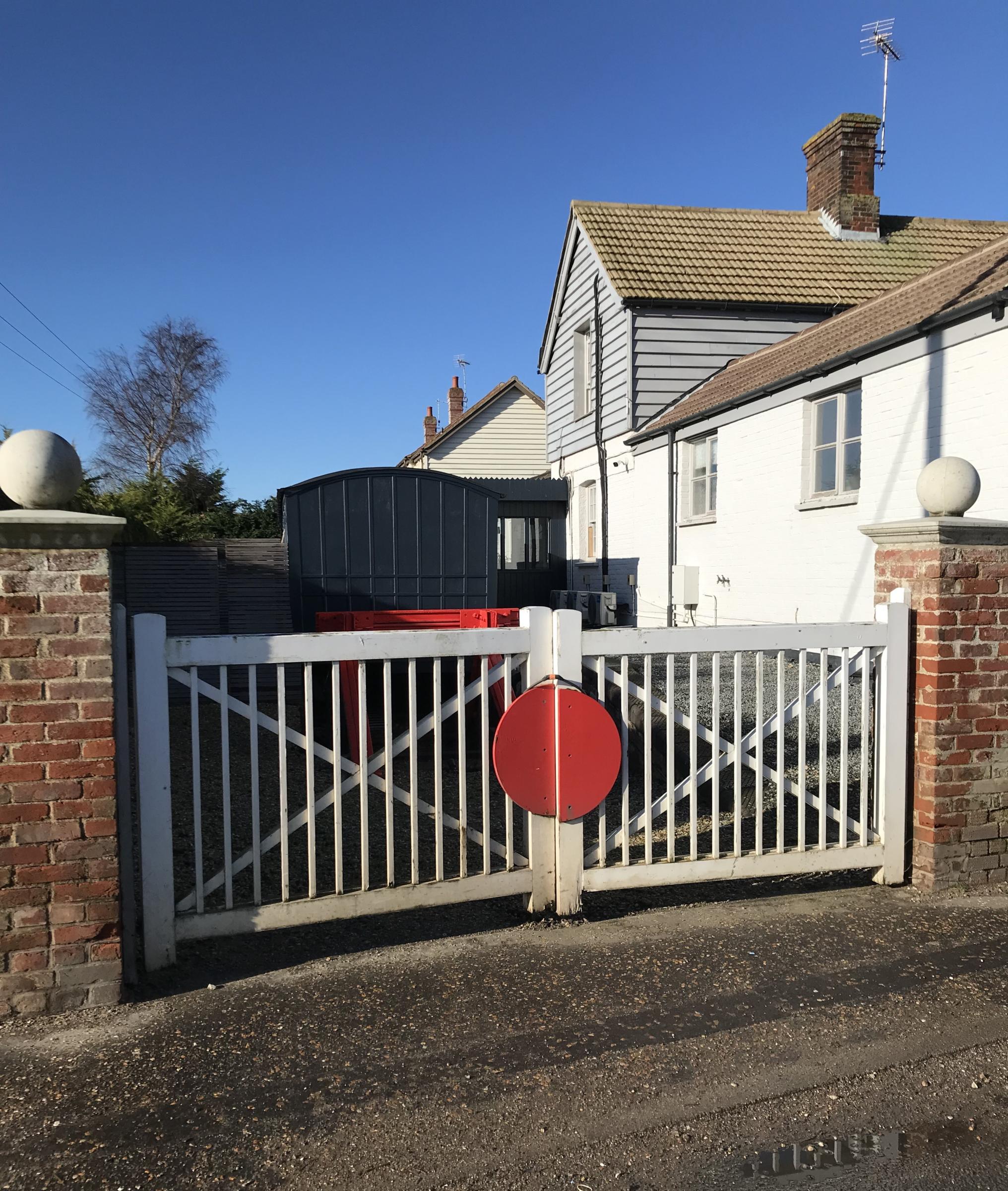
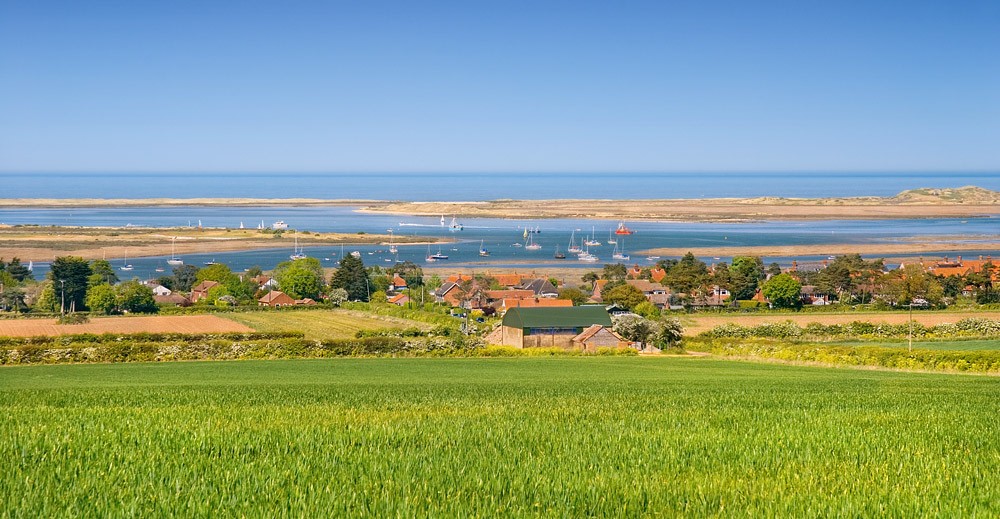
The pictures show the following:
- The railway station at Sedgeford
- All that’s left of the station at Hunstanton
- The railway station at Burnham Market